

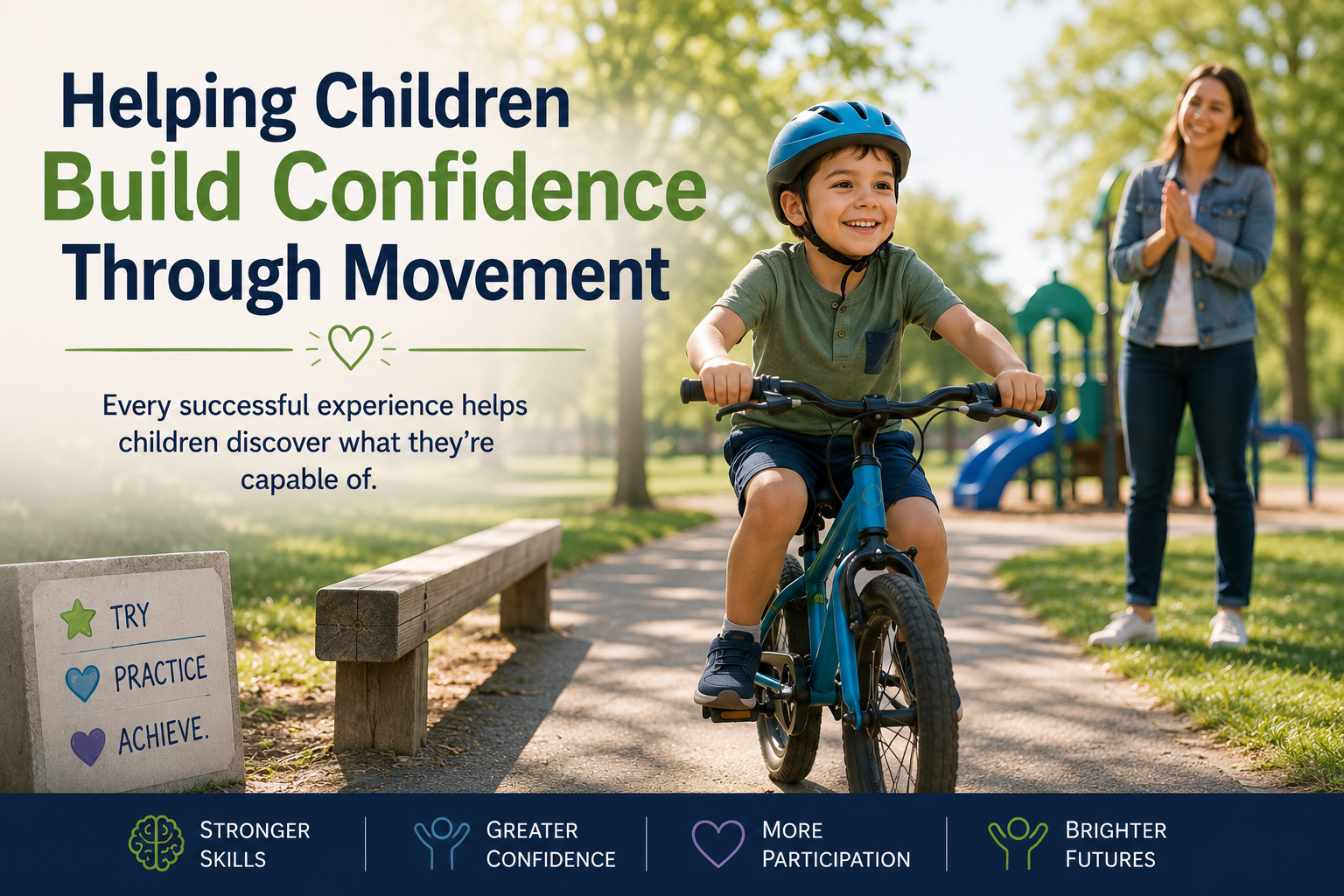
Parents often tell us they hope their child will become more confident.
It’s a natural wish.
But confidence rarely appears overnight.
Instead, confidence is built one successful experience at a time.
A child ties their shoes independently.
They ride a bicycle for the first time.
They finish a handwriting assignment.
They join a playground game.
They help make dinner.
Each of these moments says something powerful:
“I can do this.”
For children with Developmental Coordination Disorder (Dyspraxia), these experiences can be especially meaningful because movement plays such a large role in everyday life.
Confidence Doesn’t Begin with Success
Many people believe children need confidence before they try something new.
In reality, the opposite is often true.
Children usually become confident because they’ve had opportunities to succeed.
Each small accomplishment helps them become a little more willing to try the next challenge.
Confidence grows through participation.
Every Movement Builds Something Bigger
Learning a new movement isn’t only about mastering that activity.
It also builds:
- Independence
- Resilience
- Problem-solving
- Willingness to try
- Self-belief
Those qualities often carry into school, friendships, hobbies, and everyday life.
Confidence Grows One Step at a Time
Children don’t suddenly become independent.
Growth happens gradually.

Participation Matters More Than Perfection
Children rarely remember every worksheet they complete.
They remember:
⚽ Scoring a goal.
🚲 Riding a bicycle.
🎨 Finishing an art project.
🍳 Helping cook dinner.
🛝 Playing confidently on the playground.
Those experiences create memories of success.
And success builds confidence.
Confidence Can Affect Many Areas of Life
As children become more comfortable participating, families often notice changes extending beyond movement itself.
Some children become more willing to:
🤝 Join group activities
🎒 Take on new responsibilities
🏃 Try recreational activities
🎨 Explore hobbies
📚 Participate in classroom projects
🌟 Attempt things that once felt overwhelming
Progress looks different for every child, but increased confidence often opens doors to new experiences.
Helping Children Feel Capable
One of the greatest gifts adults can give children is the opportunity to experience success.
Not perfection.
Not comparison.
Success.
Every child deserves opportunities to discover:
“I figured it out.”
“I kept trying.”
“I can do hard things.”
Those moments shape confidence far more than praise alone.
How NeuroFiT Connections Can Help
At NeuroFiT Connections, our goal extends beyond improving individual movement skills.
Every child begins with a comprehensive Brain & Body Assessment, allowing us to better understand the neurological systems supporting movement, learning, and participation.
Using those results, we develop a personalized brain training program designed to strengthen the foundational brain skills that support coordinated movement and everyday confidence.
Because confidence grows when children feel capable of participating in the world around them.

Looking Toward the Future
Confidence isn’t measured by perfect performance.
It’s measured by a child’s willingness to keep participating.
To keep learning.
To keep exploring.
To keep trying.
Every successful movement becomes another step toward greater independence.
Final Thoughts
Children with Dyspraxia often work incredibly hard to accomplish everyday tasks that others may take for granted.
Recognizing those efforts—and helping children experience meaningful success—can make a lasting difference.
Movement isn’t simply about coordination.
It’s about participation.
Participation builds confidence.
Confidence helps children embrace new opportunities.
And every child deserves the opportunity to move, learn, participate, and thrive.
Frequently Asked Questions
Why is confidence important for children with Dyspraxia?
Confidence encourages children to participate in everyday activities, try new experiences, and continue developing skills even when challenges arise.
Does confidence come before success?
Often, confidence grows because of successful experiences. Small accomplishments help children become more willing to take on future challenges.
How can parents help build confidence?
Celebrate effort, recognize progress, provide opportunities for success, and encourage participation rather than perfection. Confidence grows through positive experiences over time.
Can improving movement skills increase confidence?
Many families report that as children become more comfortable participating in everyday activities, they also become more confident and willing to try new experiences. Every child’s journey is unique.
How does NeuroFiT Connections help?
Every child begins with a comprehensive Brain & Body Assessment. We use those results to create a personalized brain training program designed to strengthen the brain systems supporting movement, confidence, and everyday participation.
Related Articles
- What Is Dyspraxia? Understanding Developmental Coordination Disorder
- Is My Child Just Clumsy or Could It Be Dyspraxia?
- Why Do Some Bright Children Struggle with Coordination?
- How the Brain Coordinates Movement
- Why Handwriting, Sports & Everyday Tasks Can Be So Difficult
- Can Children with Dyspraxia Improve Their Coordination?