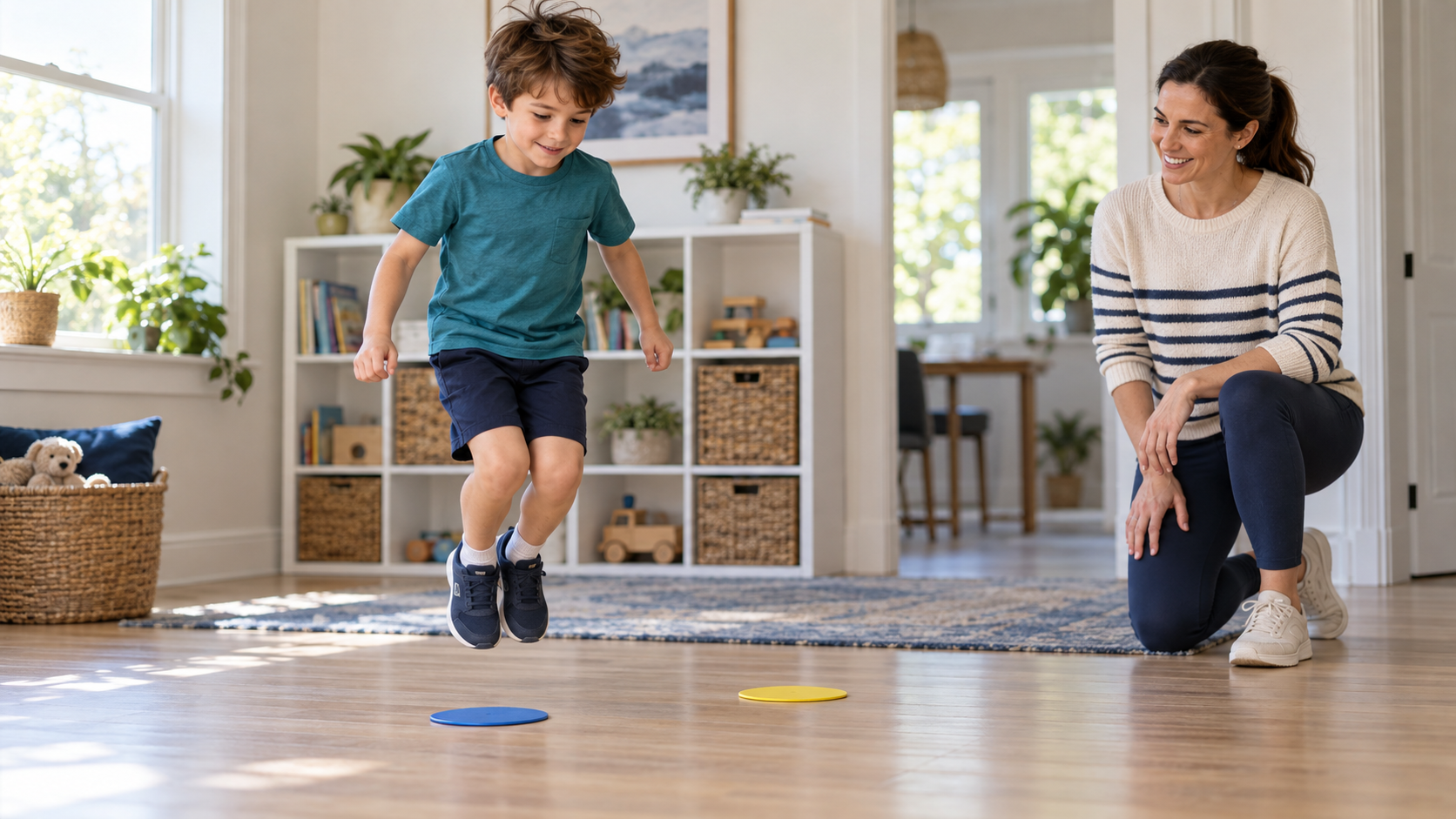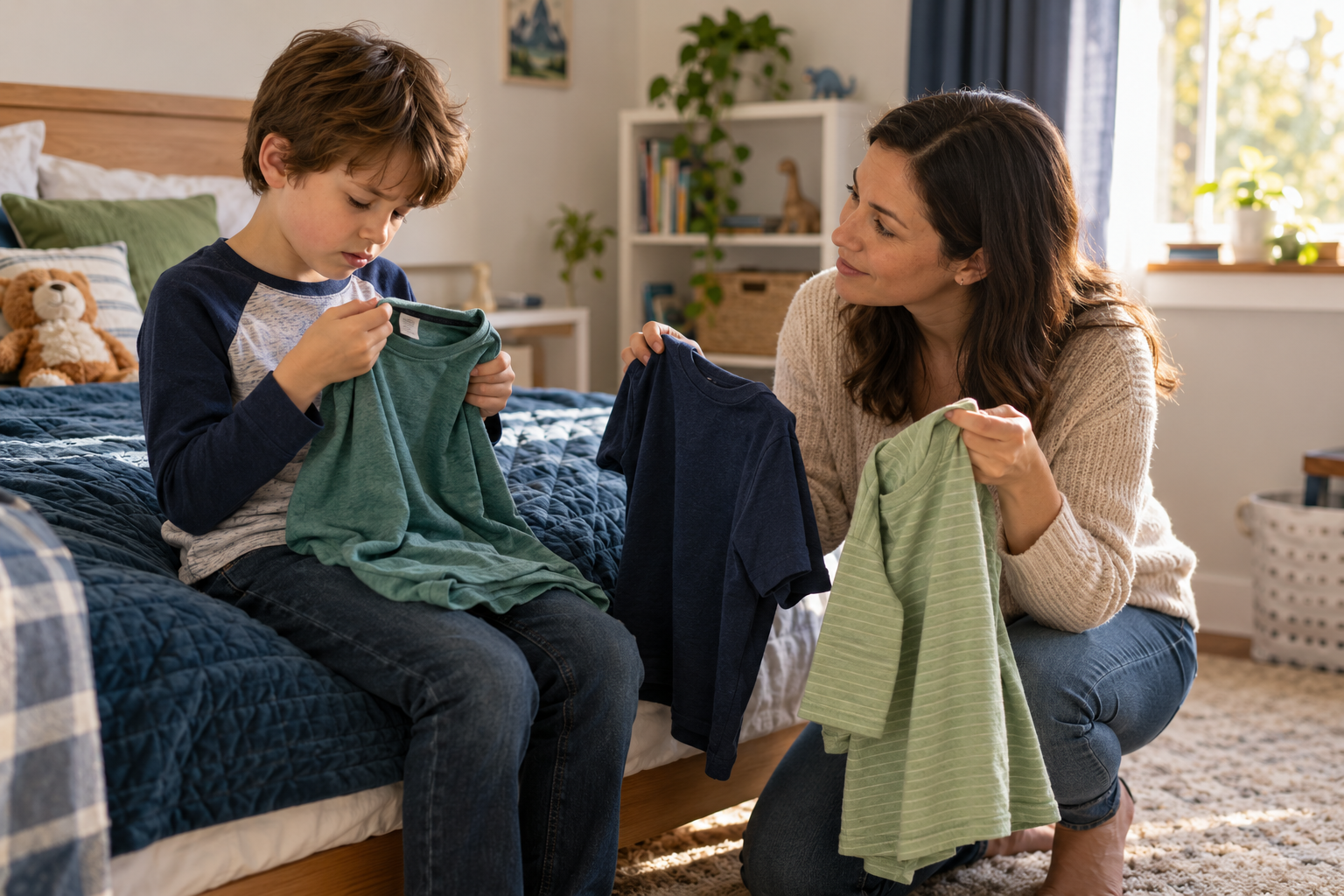


One of the most confusing things about Developmental Coordination Disorder (Dyspraxia) is that the challenges don’t seem connected.
A child may struggle with:
- ✏️ Handwriting
- 👟 Tying shoes
- 🍴 Using utensils
- ⚽ Catching a ball
- 🚲 Riding a bicycle
- 🎒 Packing a backpack
At first glance, these seem like completely different skills.
But they actually rely on many of the same brain systems working together.
Understanding that connection can help parents see why difficulties often appear across so many areas of everyday life.

Everyday Tasks Depend on More Than Muscles
When children write their name, button a shirt, catch a ball, or ride a bicycle, they aren’t simply using their muscles.
Their brain is constantly:
- Planning movement
- Maintaining balance
- Coordinating vision with movement
- Understanding where the body is in space
- Sequencing actions
- Monitoring progress
- Making corrections
When one or more of these systems requires extra effort, many everyday tasks can become more challenging.
One Everyday Task. Many Brain Skills.
Getting ready for school may look simple.
In reality, it depends on many brain systems working together.
(Insert One Everyday Task. Many Brain Skills. infographic here.)
Even a routine morning requires:
⏰ Reading the time
💭 Remembering what comes next
📋 Planning the sequence
👟 Coordinating movements
🎯 Staying focused
🧮 Estimating time
Children perform hundreds of these small actions every day.
Why Handwriting Can Be So Challenging
Handwriting is one of the most complex motor skills children learn.
It requires:
- Fine motor control
- Visual-motor integration
- Postural stability
- Motor planning
- Attention
- Working memory
- Appropriate pressure
- Timing
When several of these systems require additional effort, writing may become slower, less automatic, and more tiring.
Sports Require the Brain to Process Constantly
Sports aren’t simply about strength or athletic ability.
Children must continuously:
👁️ Track moving objects
🏃 Move their body
🤸 Maintain balance
🧠 Predict what will happen next
🎯 Focus attention
⚽ React quickly
That is why sports can feel overwhelming for some children with Dyspraxia.
Everyday Independence Depends on Coordinated Movement
Movement influences much more than recreation.
Children rely on coordinated movement to:
🍴 Eat meals
👕 Dress themselves
🪥 Brush their teeth
🎒 Organize school materials
🛒 Help with shopping
🍳 Prepare simple meals
🚲 Explore their neighborhood
These everyday experiences gradually build independence.
It’s About Participation
Parents often worry about handwriting or sports.
Children often worry about something different.
They simply want to participate.
They want to:
Play.
Join friends.
Help at home.
Feel successful.
Try something new.
Participation is often far more important than perfection.
How NeuroFiT Connections Can Help
At NeuroFiT Connections, we begin with a comprehensive Brain & Body Assessment to better understand the brain systems that support coordinated movement.
Rather than focusing on one activity—such as handwriting or sports—we evaluate the foundational neurological skills that influence many aspects of everyday life.
Using those results, we create a personalized brain training program designed around each child’s unique strengths and challenges.
Our goal is to help children build stronger foundations for movement, confidence, participation, and growing independence.

Looking Toward the Future
As children build stronger movement skills, many families tell us they begin noticing changes in everyday life.
A child may become more willing to:
- Join playground games
- Help prepare meals
- Participate in sports
- Complete classroom activities
- Try new experiences
- Become more independent
Each successful experience helps build confidence for the next one.
Final Thoughts
Handwriting.
Sports.
Getting dressed.
Riding a bicycle.
Packing a backpack.
Using utensils.
These may seem like separate challenges.
In reality, they often depend on the same foundational brain systems working together.
Understanding that connection allows us to look beyond individual tasks and focus on strengthening the brain skills that support coordinated movement throughout everyday life.
Because every child deserves the opportunity to move, learn, participate, and thrive.
Frequently Asked Questions
Why does my child struggle with so many different activities?
Many everyday activities rely on the same foundational brain systems, including motor planning, balance, visual-motor integration, body awareness, attention, and executive function. When one or more of these systems requires additional effort, challenges may appear across several areas of daily life.
Is handwriting related to coordination?
Yes. Handwriting is a complex motor task that depends on fine motor control, visual-motor integration, posture, attention, motor planning, and timing.
Why are sports difficult for some children with Dyspraxia?
Sports require children to coordinate vision, balance, timing, movement, attention, and quick decision-making. Challenges in one or more of these brain systems can make athletic activities more difficult.
Can children become more independent?
Every child develops differently. As foundational brain skills strengthen, many families report improvements in everyday participation, confidence, and independence. Individual progress varies.
How does NeuroFiT Connections help?
Every child begins with a comprehensive Brain & Body Assessment. Using those results, we develop a personalized brain training program designed to strengthen the neurological systems that support coordinated movement and everyday participation.
Related Articles
- What Is Dyspraxia? Understanding Developmental Coordination Disorder
- Is My Child Just Clumsy or Could It Be Dyspraxia?
- Why Do Some Bright Children Struggle with Coordination?
- How the Brain Coordinates Movement
- Helping Children Build Confidence Through Movement
- Can Children with Dyspraxia Improve Their Coordination?