

“Go get ready for school.”
It sounds like one task.
But a few minutes later, your child is sitting on the bedroom floor playing with something they found under the bed.
They’re still wearing pajamas.
Their teeth aren’t brushed.
Their backpack isn’t packed.
And somehow, despite being reminded three times, they still haven’t found their shoes.
You may find yourself thinking:
“You do this every single morning. How can you not know what to do?”
The answer may have very little to do with whether your child knows how to get ready for school.
Knowing what to do and independently organizing your brain to actually do it are different things.
That’s where executive function comes in.
Executive functions help us organize our thoughts and behavior around a goal. They contribute to everyday abilities such as planning, remembering what we’re supposed to do, managing time, resisting distractions, shifting between tasks, monitoring our progress, and following through.
ADHD can make many of these everyday demands more difficult. Current ADHD guidance specifically recognizes difficulties involving organization, following instructions, completing tasks, and managing everyday responsibilities.
And that’s why a task that looks simple from the outside can require an enormous amount of brain work on the inside.
“Go get ready for school.”
It sounds like one task.
But a few minutes later, your child is sitting on the bedroom floor playing with something they found under the bed.
They’re still wearing pajamas.
Their teeth aren’t brushed.
Their backpack isn’t packed.
And somehow, despite being reminded three times, they still haven’t found their shoes.
You may find yourself thinking:
“You do this every single morning. How can you not know what to do?”
The answer may have very little to do with whether your child knows how to get ready for school.
Knowing what to do and independently organizing your brain to actually do it are different things.
That’s where executive function comes in.
Executive functions help us organize our thoughts and behavior around a goal. They contribute to everyday abilities such as planning, remembering what we’re supposed to do, managing time, resisting distractions, shifting between tasks, monitoring our progress, and following through.
ADHD can make many of these everyday demands more difficult. Current ADHD guidance specifically recognizes difficulties involving organization, following instructions, completing tasks, and managing everyday responsibilities.
And that’s why a task that looks simple from the outside can require an enormous amount of brain work on the inside.
What Is Executive Function?
Think of executive function as the brain’s management system.
Imagine an orchestra.
Every musician may know how to play their instrument perfectly.
But someone still needs to coordinate:
When do we start?
What happens next?
Which section needs our attention?
Are we going too fast?
Do we need to adjust?
When are we finished?
Executive functions play a similar coordinating role in everyday behavior.
A child may possess all the individual abilities needed to complete a task but still struggle to organize those abilities around a goal.
That’s an important distinction.
The child may know how to do every step—and still struggle to manage the steps independently.
“Get Ready for School” Isn’t One Task
Consider what actually happens between:
“Go get ready.”
and:
Ready.
Your child may need to:
⏰ Recognize how much time is available.
💭 Remember everything that needs to happen.
📋 Decide what to do first.
▶️ Begin the first task.
🎯 Stay focused long enough to complete it.
🛑 Ignore toys, screens, siblings, pets, and other distractions.
🔄 Shift from getting dressed to brushing teeth.
🎒 Remember what belongs in the backpack.
🔎 Notice what’s missing.
💛 Manage frustration when something can’t be found.
⏭️ Move to the next step without another reminder.
✅ Recognize when the entire routine is complete.
That’s not one task.
That’s an executive-function workout.
And the same thing happens throughout a child’s day.

The Executive Skills Hidden Inside Everyday Life
Executive function isn’t one single ability.
Several different skills work together to help us accomplish everyday goals.
▶️ Task Initiation
You say:
“Start your homework.”
Your child says:
“Okay.”
Ten minutes later…
Nothing has happened.
This can be incredibly frustrating because the child isn’t necessarily refusing the task.
They may even agree that it needs to be done.
But understanding:
“I need to do this”
and successfully producing:
“I am beginning this now”
are different processes.
Task initiation involves moving from intention into action.
For some children, the hardest part of homework isn’t the homework.
It’s starting.
📋 Planning
Planning allows us to look ahead and determine what needs to happen to accomplish a goal.
Imagine the teacher says:
“Your science project is due next Friday.”
A child needs to figure out:
What is the assignment?
What materials do I need?
How many steps are involved?
Which step should happen first?
How long will each part take?
When should I begin?
What needs to happen today?
What can wait until tomorrow?
Without a plan, “science project” remains one enormous abstract task.
And enormous abstract tasks are difficult to start.
🔢 Sequencing
Even when a child knows all the individual steps, they still need to put them in a useful order.
You probably wouldn’t:
put toothpaste on the toothbrush,
eat breakfast,
brush one tooth,
put your shoes on,
finish brushing,
get dressed,
then return to breakfast.
But organizing behavior into a logical sequence requires the brain to continually answer:
“What comes next?”
That question appears hundreds of times throughout a child’s day.
💭 Working Memory
We’ve already explored working memory in Blog Post #3.
Working memory is the brain’s temporary mental workspace—the ability to keep relevant information available while using it.
That means executive function depends heavily on working memory.
Your child might begin walking upstairs thinking:
Shoes. Backpack. Homework.
Then encounter:
🐕 the dog,
🧸 a toy,
💬 a sibling,
🎵 music,
💭 a completely unrelated thought…
and suddenly the original plan disappears.
The problem wasn’t necessarily understanding the instruction.
The information didn’t remain available long enough to guide the behavior.
⏰ Time Management
Children don’t experience time exactly the way adults do.
Adults have years of experience estimating:
“That will take about 15 minutes.”
“I need to start now.”
“We’re running late.”
“I don’t have time to do that first.”
Children are still developing these skills.
ADHD can add another layer of difficulty. NIMH recommends strategies involving consistent routines, time management, organization, written reminders, and breaking large tasks into smaller steps because these areas can be challenging for people with ADHD.
A child may genuinely believe:
“I have plenty of time.”
until suddenly:
“WE HAVE TO LEAVE RIGHT NOW!”
🎯 Sustained Attention
Starting isn’t enough.
The brain has to stay engaged long enough to finish.
Brush all the teeth.
Complete all five math problems.
Put away all the clothes.
Pack everything needed for school.
A child may begin successfully and then become distracted halfway through.
That’s how you get:
one sock on,
toothbrush sitting on the counter,
backpack open on the floor,
and a child who is now building LEGO.
🛑 Inhibitory Control
Executive function also helps us resist things that compete with our goal.
The goal is:
Get dressed.
But the brain notices:
Hey! There’s the book I was looking for yesterday!
Now the child has to inhibit the impulse to investigate the book and maintain the original goal.
Adults do this constantly.
We notice the phone while working.
We think about checking email while cooking.
We see something interesting while cleaning.
The difference is that mature executive skills often help us say:
“Later. Finish this first.”
Children are still developing that ability.
🔄 Cognitive Flexibility
Plans rarely go perfectly.
Your favorite shirt is dirty.
The cereal is gone.
The backpack isn’t where you expected.
Mom says the schedule changed.
The homework problem doesn’t work the way you thought it would.
Now the brain has to:
Update the plan.
Children who struggle with cognitive flexibility may have more difficulty adapting when the original plan stops working.
What looks like:
“Why are you making such a big deal about this?”
may sometimes involve difficulty mentally reorganizing around an unexpected change.
🔎 Self-Monitoring
Imagine writing a paragraph without ever rereading it.
Or packing a backpack without checking whether everything is inside.
Or cleaning a room without noticing that half the toys are still on the floor.
Self-monitoring helps us ask:
How am I doing?
Did I forget something?
Am I still doing what I’m supposed to be doing?
Is this working?
Am I finished?
Without effective self-monitoring, a child may genuinely believe:
“I’m done!”
while standing in the middle of a room that clearly says otherwise.
Knowing How Isn’t the Same as Doing It Independently
This may be one of the most important ideas in this entire ADHD series.
Your child may know perfectly well:
how to brush their teeth,
how to pack their backpack,
how to solve the math problem,
where dirty clothes belong,
what they need for soccer,
and what time school begins.
So adults naturally think:
“You know how to do this.”
And they’re right.
But knowledge isn’t the only requirement for independent performance.
The child also has to coordinate that knowledge in the right order, at the right time, while resisting distractions, remembering the goal, managing frustration, monitoring progress, and continuing until the task is complete.
That’s why:
Can do it
and
Can independently manage doing it
aren’t always the same developmental milestone.
Why Do I Have to Remind Them Constantly?
Morning:
“Brush your teeth.”
Homework:
“Stay on task.”
Afternoon:
“Put your shoes away.”
Dinner:
“Bring your plate to the sink.”
Evening:
“Did you pack your backpack?”
Bedtime:
“What are you supposed to be doing?”
By the end of the day, parents can feel like they’ve become their child’s external executive-function system.
In a sense, they sometimes have.
The parent is providing the:
⏰ time awareness,
💭 reminder,
📋 plan,
▶️ initiation cue,
🎯 attention redirect,
🔎 progress check,
and ✅ completion check.
That’s exhausting.
But simply removing all of those supports and saying:
“You’re old enough. Figure it out.”
doesn’t necessarily create executive function.
Sometimes it simply removes the structure that was allowing the child to succeed.
Support Isn’t Doing It for Them
This distinction matters.
There’s a difference between:
Doing a task for a child
and:
Providing structure that helps the child do the task.
A checklist doesn’t brush their teeth.
A timer doesn’t put their shoes on.
A visual schedule doesn’t pack the backpack.
Breaking homework into smaller steps doesn’t solve the math problems.
These tools can reduce some of the executive demands surrounding the task so the child can focus more of their resources on actually completing it.
Current CDC guidance recommends practical supports including routines, organization, managing distractions, clear and specific directions, limiting overwhelming choices, and breaking complicated tasks into shorter steps.
Support the management system without taking over the job.

Move Information Outside the Brain
Remember the mental whiteboard from our working-memory article?
We don’t need to make children remember everything internally.
Instead of repeatedly saying:
“Did you brush your teeth? Did you get dressed? Did you pack your lunch? Where’s your backpack?”
put the routine somewhere the child can see it.
MORNING
☐ Get dressed
☐ Brush teeth
☐ Eat breakfast
☐ Pack lunch
☐ Check backpack
☐ Shoes
☐ Water bottle
Now the child doesn’t have to remember the entire routine.
They have to learn:
Check the list.
That’s a much smaller executive demand.
Make the Starting Point Obvious
Consider:
“Clean your room.”
Where do I start?
Clothes?
Bed?
Desk?
Toys?
Trash?
Books?
For a child struggling with planning and initiation, too many possible starting points can become a barrier.
Instead:
“First, put all the dirty clothes in the hamper.”
Now the brain has one target.
When that’s finished:
“Great. Next, let’s put the books on the shelf.”
The room didn’t become easier to clean.
The decision-making demand became easier to manage.
Break the Mountain Into Steps
Large tasks can feel enormous when the brain has to organize the entire thing at once.
WRITE BOOK REPORT
may become:
☐ Choose book
☐ Read chapter
☐ Write three notes
☐ Choose main idea
☐ Write opening sentence
☐ Write first paragraph
☐ Take a break
☐ Continue
The goal isn’t to make every task easy.
It’s to make the structure visible and manageable.
NIMH and CDC both recommend breaking larger or complicated tasks into smaller, more manageable steps.
Use Routines to Reduce Decisions
Every decision requires some executive effort.
What do I do first?
Where does this go?
What happens next?
Do I need this?
When predictable tasks happen in predictable ways, the routine begins answering some of those questions automatically.
For example:
AFTER SCHOOL
🎒 Backpack on hook
↓
🥤 Snack
↓
📋 Check homework
↓
📚 Homework
↓
🌳 Free time
The child doesn’t have to reinvent the afternoon every day.
The environment provides some of the organization.
Make Time Visible
“Twenty minutes” is invisible.
A child can’t see it.
For children who struggle with time management, consider making time more concrete.
A visual timer.
A clock.
A written schedule.
A countdown.
A clear endpoint:
“We’ll work until 4:15.”
instead of:
“Work for a while.”
You’re converting an abstract concept into information the child can use.
Reduce Competing Demands
Sometimes we respond to executive-function difficulty by adding more instructions.
The child is struggling to get ready, so we say:
“Come on! You’re going to be late. Did you brush your teeth? Where’s your water bottle? You still need socks. And don’t forget your homework!”
Now the child’s brain has more information to manage.
When the system is overloaded, simplifying can be more effective.
“Socks first.”
Then:
“Now check your list.”
Clear.
Short.
Actionable.
Build Independence Gradually
Independence doesn’t have to happen all at once.
Maybe today:
Parent gives every reminder.
Later:
Parent points to the checklist.
Then:
Child checks the checklist with one reminder.
Eventually:
Child checks independently.
And perhaps someday:
The routine becomes automatic enough that the checklist is no longer needed.
That’s development.
The support changes as the skill changes.
CDC notes that organizational training for children and adolescents with ADHD can specifically teach planning, time-management, and organizational skills.
The goal isn’t permanent dependence on support.
The goal is support that helps build greater independence.
What Progress Can Look Like
Executive-function progress may not look dramatic from one day to the next.
It might look like:
🌟 Starting homework after one reminder instead of five.
🌟 Checking the backpack list independently.
🌟 Remembering what comes next in the morning routine.
🌟 Breaking a school project into steps.
🌟 Realizing, “I’m getting distracted.”
🌟 Estimating how long something will take more accurately.
🌟 Returning to a task after an interruption.
🌟 Handling an unexpected change without abandoning the entire plan.
🌟 Finishing something without an adult standing nearby.
Each of those represents a child taking over a little more of the management work adults previously had to provide.
Look Beyond “Lazy”
Few labels are more discouraging for a child than:
Lazy.
Especially when the child may be working incredibly hard.
Executive-function difficulties can look like:
not caring,
poor motivation,
carelessness,
procrastination,
irresponsibility,
defiance,
or laziness.
But those descriptions tell us what the behavior looks like.
They don’t necessarily tell us what made the task difficult.
Instead of:
“Why won’t my child do this?”
try asking:
“Where is the task breaking down?”
Is it:
▶️ Starting?
📋 Planning?
💭 Remembering?
⏰ Managing time?
🎯 Staying focused?
🛑 Resisting distraction?
🔄 Adapting?
🔎 Monitoring?
✅ Finishing?
Now we have something much more useful to work with.
Executive Function Isn’t the Same as ADHD
Executive-function difficulties can be important in ADHD, but the two terms aren’t interchangeable.
A child can have executive-function challenges for many reasons, and children with ADHD don’t all have identical executive-function profiles.
Other difficulties—including anxiety, depression, sleep problems, and learning disorders—can sometimes produce symptoms that resemble ADHD, which is one reason diagnosis should involve an appropriate clinical evaluation rather than assuming that forgetfulness, disorganization, or procrastination automatically means ADHD.
And even among two children who both have ADHD:
One may struggle primarily with initiation.
Another with working memory.
Another with organization.
Another with impulse control.
Another with time management.
Another with several areas at once.
Same diagnosis. Different brain skills.
Understanding Your Child’s Individual Brain Skills
At NeuroFiT Connections, this individual variation is why we don’t assume an ADHD diagnosis tells us everything we need to know about a child.
We begin with a comprehensive Brain & Body Assessment to develop a broader picture of the individual child’s strengths and challenges.
Depending on the child’s age and abilities, we evaluate multiple areas of brain and body function. We then use those findings to help guide a personalized program focused on foundational skills that may benefit from additional support.
The goal isn’t to force every child into the same ADHD program.
We don’t build a program around ADHD. We build it around your child.
The Task May Be Simple. The Brain Work Isn’t.
When adults look at:
Put your shoes on.
Clean your room.
Start your homework.
Get ready for school.
we see familiar tasks.
We’ve performed them thousands of times.
Much of the planning and organization has become automatic.
A developing child may experience something very different.
Behind a seemingly simple task may be an invisible sequence of:
Remember → Plan → Start → Focus → Resist → Shift → Monitor → Finish
Understanding that doesn’t mean lowering expectations.
It means recognizing the skills required to meet them.
Instead of asking only:
“Why can’t my child just do this?”
we can ask:
“Which part of doing this is difficult?”
Because once we identify where the process is breaking down, we have a much better idea of what kind of support may help.
The task may look simple. The brain work behind it isn’t.
Frequently Asked Questions
What is executive function?
Executive function is an umbrella term for mental processes that help us organize thoughts and behavior around goals.
Everyday tasks may rely on abilities involving planning, working memory, attention, inhibition, organization, time management, flexible thinking, monitoring progress, and completing tasks.
These skills work together rather than operating completely independently.
Is executive dysfunction the same thing as ADHD?
No.
Executive-function difficulties can occur in people with ADHD, but executive dysfunction and ADHD are not synonymous.
ADHD is a neurodevelopmental disorder diagnosed according to specific clinical criteria. Difficulties involving organization, forgetfulness, attention, planning, or task completion can also occur for other reasons.
Why can my child do something one day but not the next?
Knowing how to perform a task doesn’t guarantee identical performance in every situation.
Executive demands can change depending on distractions, fatigue, stress, interest, complexity, environment, time pressure, emotional state, and how much external structure is available.
That’s why inconsistency doesn’t automatically mean a child is choosing not to try.
Why does my child need constant reminders?
Reminders can function as external executive support.
The adult may be supplying information the child is having difficulty generating or maintaining independently—what needs to happen, when to begin, what comes next, whether they’ve become distracted, and whether the task is complete.
The long-term goal can be to gradually transfer more of that management to the child through routines, visual supports, checklists, timers, and skill development.
Do checklists and routines prevent children from learning independence?
Used appropriately, they can do the opposite.
A checklist moves information outside working memory and gives the child something they can learn to manage themselves. A routine also reduces the number of new decisions required each time a familiar task occurs.
CDC recommends routines, organization, clear directions, breaking complex tasks into smaller steps, and other forms of structure for children with ADHD.
Can executive-function skills improve?
Children can learn strategies and routines that help them manage executive demands more effectively, and organizational skills training is among the school-based approaches used with children and adolescents with ADHD.
The appropriate approach depends on the individual child. Current ADHD care may also involve behavioral interventions, school supports, medication, or combinations of these depending on the child’s age and needs.
Related Articles
- What Is ADHD? Understanding Attention, Executive Function & Self-Regulation
- Why can my child focus on video games, but not homework?
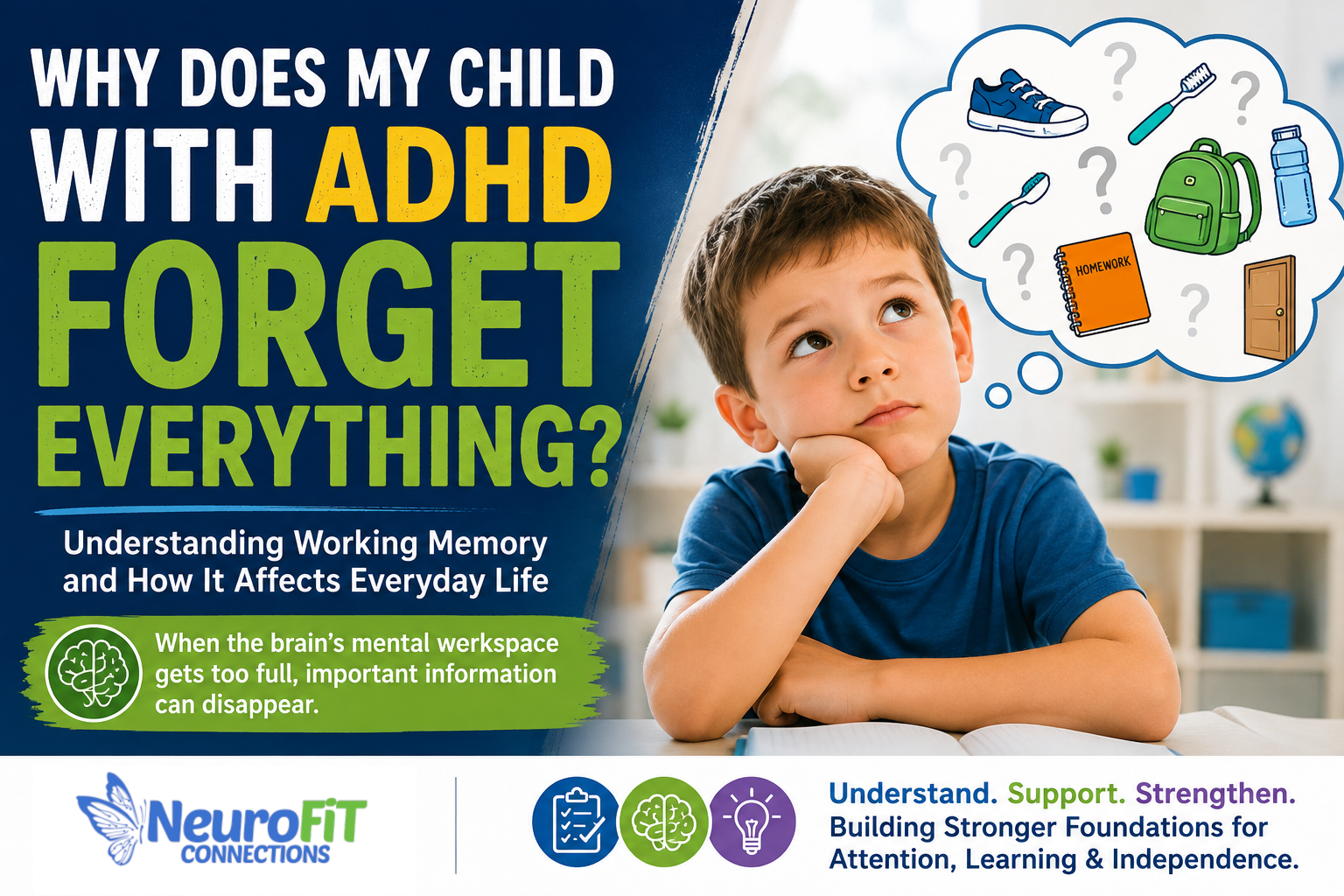
- Why Does My Child with ADHD Forget Everything?
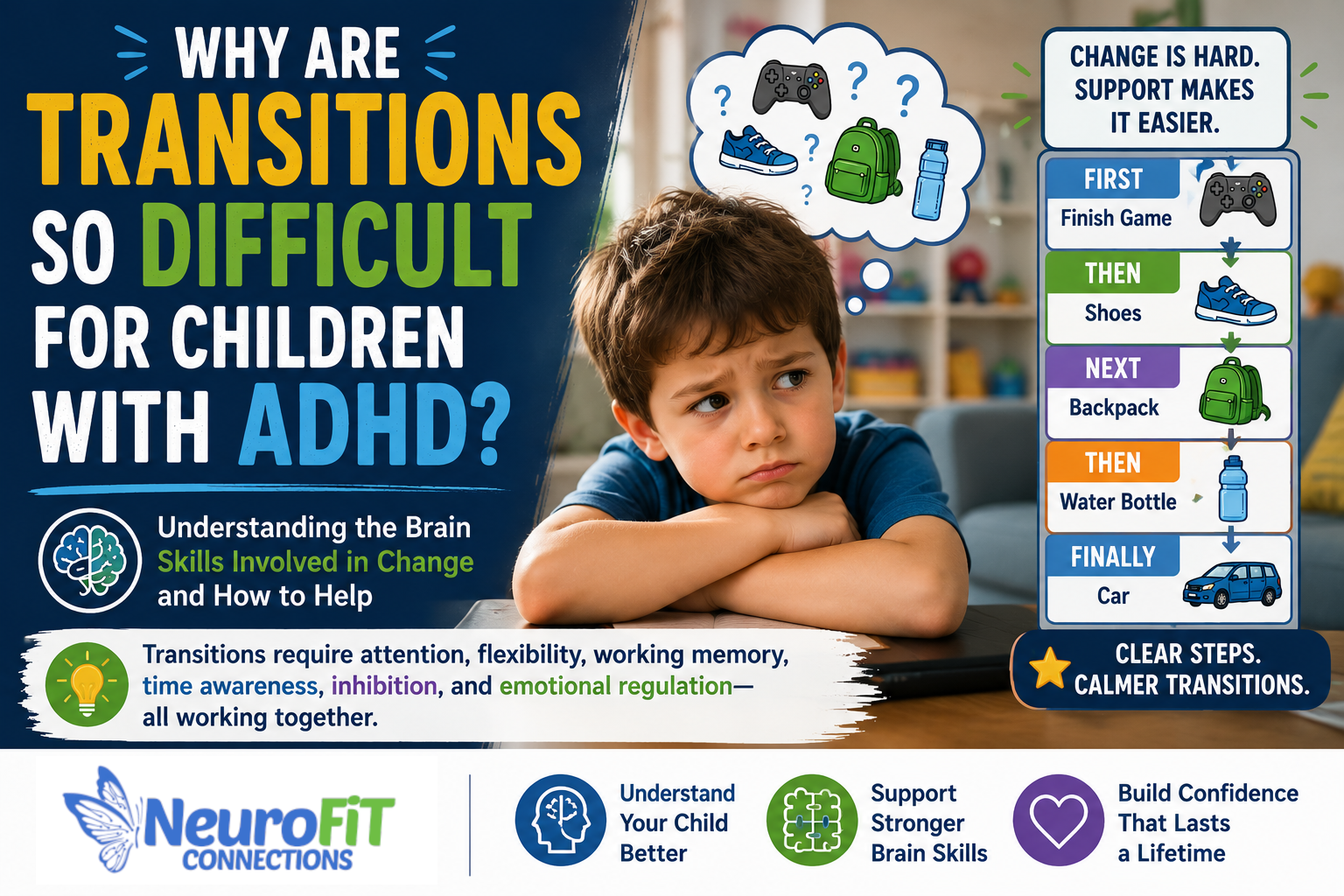
- Why Are Transitions So Difficult for Children with ADHD?
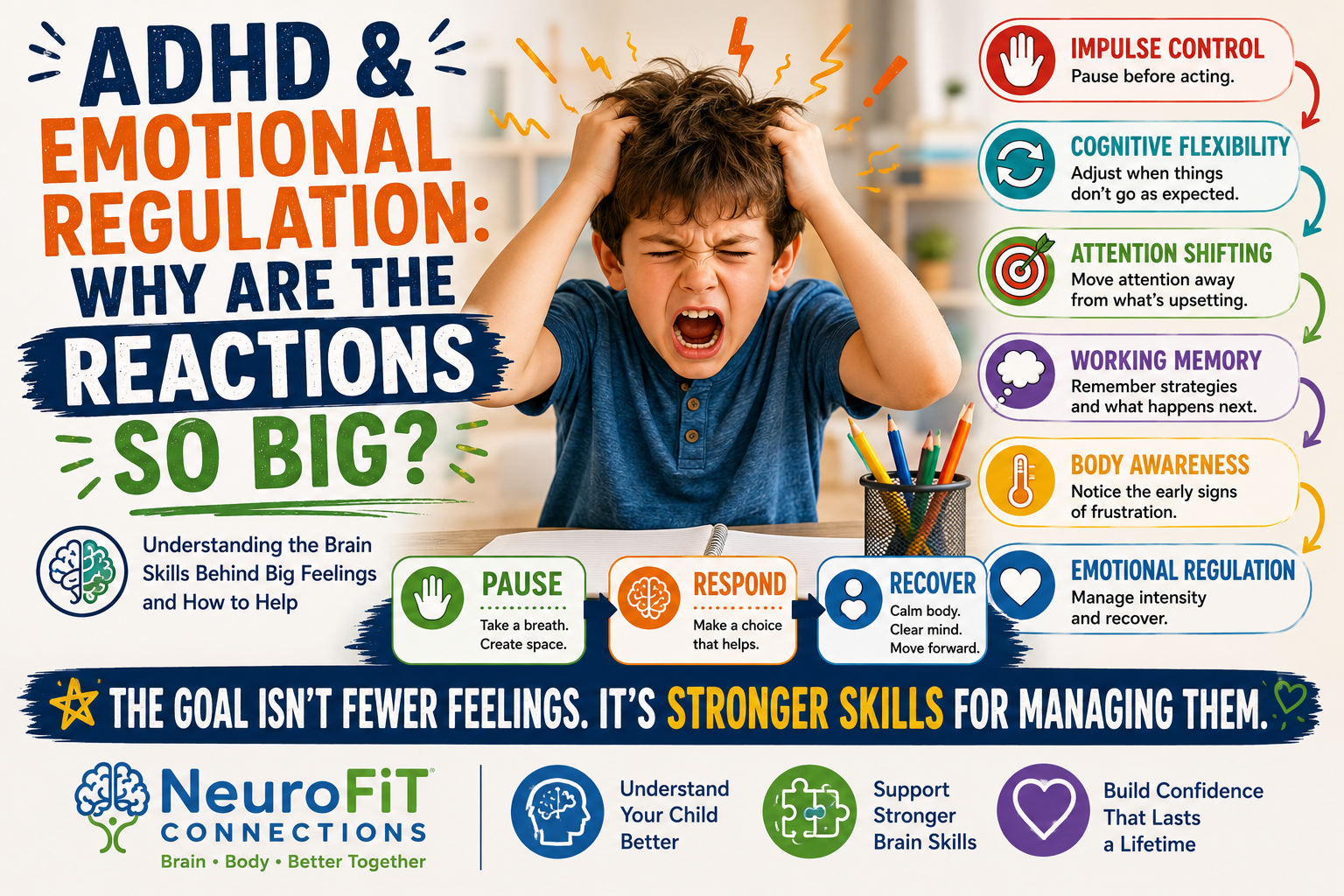
- ADHD and Emotional Regulation: Why Are the Reactions So Big?
- Can Children with ADHD Improve Their Attention and Self-Regulation?