NeuroFiT Connections Child Wellness Program

Helping Children Build Stronger Attention, Self-Regulation & Lifelong Confidence

No medication. No invasive procedures. Just a personalized, neuroscience-informed approach designed to strengthen the foundational brain systems involved in attention, focus, executive functioning, self-regulation, learning, emotional control, and everyday success.

ADHD is about much more than simply having difficulty paying attention. It can affect focus, impulse control, emotional regulation, organization, working memory, planning, time management, and many of the everyday skills children rely on at home, at school, and in their relationships. Every child experiences ADHD differently, with their own unique combination of strengths and challenges.

At NeuroFiT Connections, we recognize that challenges with attention, self-regulation, organization, and executive functioning can reflect differences in how a child’s brain processes and responds to information—not simply a lack of motivation, effort, or discipline. That’s why every program begins with a comprehensive Brain & Body Assessment to better understand how your child’s brain is functioning. Using those results, we develop a personalized brain training program designed to strengthen the neurological systems that support attention, self-regulation, executive functioning, learning, confidence, and everyday participation.

Rather than building a program around a diagnosis, we build it around your child. Whether your child has been diagnosed with ADHD or ADD, struggles with attention and executive functioning, or simply finds it difficult to stay organized, focused, or regulated without a formal diagnosis, our goal is to understand their unique brain and create a personalized roadmap for growth.

5.0 (100+ parent ratings)
Rated 5 out of 5

Does This Sound Like Your Child?

Every child has moments when they become distracted, forget instructions, or have trouble sitting still.

But when these challenges consistently interfere with learning, relationships, emotional regulation, or everyday life, it may be a sign that something more is going on.

Parents often tell us their child:

Every child is unique, and no child experiences every challenge on this list. ADHD can look very different from one child to another, which is why understanding your child’s individual brain is so important.

Download Your FREE ADHD Parent Guide

Discover More About ADHD and How the Brain Works

If your child has ADHD—or you suspect they might—you’ve probably received advice from every direction. Medications, behavior charts, school accommodations, counseling, diet changes… it can quickly become overwhelming.

The New Perspective on ADHD was written to help parents better understand what’s happening inside their child’s brain while offering practical strategies and hope for the future.

Inside this complimentary guide, you’ll discover:

✔ What ADHD really is—and what it isn’t

✔ The science behind ADHD and brain development

✔ Why children with ADHD often struggle with attention, impulsivity, and emotional regulation

✔ The surprising strengths many children with ADHD possess

✔ Traditional and holistic approaches to supporting children with ADHD

✔ How NeuroFiT Connections helps strengthen the underlying brain functions involved in attention, learning, and self-regulation

Whether your child has recently been diagnosed or you’ve been navigating ADHD for years, this guide will help you better understand your child’s unique brain and the possibilities that lie ahead.

Complete the form below to instantly receive your free copy of The New Perspective on ADHD.

A New Perspective on ADHD

Understanding ADHD: Looking Beyond the Symptoms

ADHD is often described as a condition that affects attention, impulsivity, and hyperactivity. While these behaviors are easy to observe, they are only part of the story.

Behind those symptoms are complex brain functions that influence how children pay attention, process information, regulate emotions, manage impulses, organize tasks, and respond to the world around them. Every child with ADHD has a unique combination of strengths and challenges, which is why no single treatment or strategy works for everyone.

At NeuroFiT Connections, we believe it’s important to look beyond the diagnosis and understand why a child is struggling. Difficulties with attention, executive functioning, working memory, processing speed, sensory processing, motor coordination, and other neurological systems can all contribute to the everyday challenges associated with ADHD.

Rather than focusing solely on managing symptoms, our comprehensive Brain & Body Assessment helps identify the underlying brain functions that may be affecting your child’s ability to learn, focus, regulate emotions, and succeed at home and at school. Using those results, we create a personalized brain training program designed to strengthen the specific neurological systems that need support.

Our goal is to help children build the foundational brain skills that support attention, learning, self-regulation, confidence, and long-term success.

Your Child's Journey Starts with Understanding

Every personalized program begins with a comprehensive Brain & Body Assessment designed to better understand your child’s unique strengths and challenges.

Your Brain & Body Assessment Includes:

How ADHD Can Affect Everyday Life

ADHD is about much more than paying attention in the classroom.

The brain skills involved in attention, working memory, self-regulation, planning, organization, and time management influence nearly every part of a child’s day—from getting ready in the morning to completing schoolwork, managing friendships, and winding down at night.

Children with ADHD are often working much harder than others realize. Tasks that seem simple to classmates, siblings, or adults may require significantly more mental effort.

📚 Learning

Children may understand the material but still struggle to stay focused, remember directions, begin assignments, complete multi-step tasks, or consistently show what they know.

⏰ Daily Routines

Getting dressed, leaving the house on time, transitioning between activities, completing chores, or settling into bedtime routines may require frequent reminders and support.

🤝 Friendships

Impulsivity, interrupting, difficulty waiting, or missing social cues can sometimes make friendships and group activities more challenging.

💛 Emotional Regulation

Some children experience frustration, disappointment, excitement, or other emotions very intensely and may need more time or support to regain a sense of calm.

🎒 Organization

Keeping track of homework, belongings, schedules, responsibilities, and materials can be difficult when planning and working memory are already under heavy demand.

🌟 Confidence

Repeated struggles with attention, organization, or self-regulation may cause children to doubt themselves, avoid difficult tasks, or become reluctant to participate—even when they are bright, creative, and capable.

One Day. Hundreds of Decisions.

A typical school day requires children to make hundreds of small decisions.

Should I pack my homework?

Did I remember my lunch?

What comes next?

How much time do I have?

Should I interrupt?

Where did I put my folder?

How do I finish this assignment?

Many of these decisions depend on executive functioning—the brain’s ability to plan, organize, remember, prioritize, manage time, shift attention, and regulate behavior.

For children with ADHD, these mental tasks often require much more conscious effort.

One Day, Hundreds of Decisions

Why Everyday Tasks Can Feel So Exhausting

When attention and executive functioning are working efficiently, many daily decisions happen almost automatically.

For a child with ADHD, those same decisions may require repeated mental effort throughout the day.

They may need to consciously remember:

  • What they were asked to do.
  • Where they left something.
  • Which step comes next.
  • How much time remains.
  • Whether they should stop or keep going.
  • How to respond when they feel frustrated.
  • How to shift from one activity to another.

By the end of the school day, that constant mental workload can be exhausting.

What may look like laziness, defiance, or lack of motivation may sometimes reflect a child who has spent much of the day trying to manage demands that require significantly more effort for them.

📚 Learning

Attention, working memory, and executive functioning all play an important role in learning. Children may understand the material but still have difficulty staying focused, following directions, beginning assignments, or consistently showing what they know.

⏰ Daily Routines

Getting ready for school, transitioning between activities, completing chores, or settling into bedtime routines often depends on planning, organization, time management, and self-regulation.

🎒 Organization

Keeping track of homework, backpacks, jackets, schedules, and other responsibilities requires children to organize information, prioritize tasks, and remember what comes next.

🤝 Friendships

Successful friendships rely on listening, taking turns, managing impulses, reading social situations, and responding appropriately during conversations and group activities.

💛 Emotional Regulation

Some children experience emotions more intensely and may need additional support managing frustration, disappointment, excitement, or unexpected changes throughout the day.

🌟 Confidence

Repeated challenges with attention, organization, or self-regulation can sometimes affect a child’s confidence. As children experience more success in everyday life, they often become more willing to participate, try new things, and believe in themselves.

ADHD Can Affect Confidence Too

Children notice when something seems easier for everyone else.

They may see classmates remember assignments, organize materials, finish work, or move smoothly between activities while they continue needing reminders.

Over time, some children begin saying things like:

“I always forget.”

“I can’t do anything right.”

“Why am I always in trouble?”

“I’m bad at school.”

Those statements do not reflect a child’s intelligence or potential.

They often reflect frustration.

That is why helping children strengthen foundational brain skills is about more than improving attention. It is also about helping them experience more success in everyday life.

Looking Beyond the Behavior

The behaviors parents and teachers see are often only the visible part of the picture.

Difficulty focusing.

Interrupting.

Forgetting instructions.

Losing belongings.

Emotional outbursts.

Incomplete assignments.

Beneath those behaviors are brain systems involved in:

  • 🎯 Attention
  • 💭 Working Memory
  • 📋 Executive Function
  • ⏰ Time Management
  • 🧩 Organization
  • 💛 Emotional Regulation
  • 🔄 Cognitive Flexibility
  • 🧠 Processing Efficiency

Understanding how those systems are functioning helps us move beyond the question:

“Why won’t my child do this?”

and begin asking:

“What is making this task so difficult for my child?”

That is a much more useful place to begin.

ADHD can affect many different parts of everyday life, but no two children experience it in exactly the same way.

One child may struggle most with focus.

Another with impulsivity.

Another with organization.

Another with emotional regulation.

That is why a personalized approach matters.

The next step is understanding the brain systems behind those challenges—and how they work together to support attention, self-regulation, learning, and everyday confidence.

NeuroFiT Connections cognitive training involves multiple modalities; sensory, physical, and cognitive

Building the Brain Skills That Support Attention, Learning, and Success

Attention is not a single skill controlled by one part of the brain. Staying focused, following directions, managing impulses, organizing tasks, regulating emotions, and completing schoolwork all depend on multiple brain systems workinThe skills involved in planning, organizing, prioritizing, beginning tasks, monitoring progress, and following through.g together efficiently.

For children with ADHD, some of these systems may require more effort. A child may understand exactly what they are supposed to do but have difficulty holding the instructions in mind, getting started, staying with the task, managing distractions, or recognizing how much time has passed.

That is why we look beyond the diagnosis.

At NeuroFiT Connections, the Brain & Body Assessment helps us better understand the individual brain functions that may be contributing to the challenges your child is experiencing. Rather than assuming every child with ADHD has the same needs, we use the assessment results to identify areas of strength as well as areas that may benefit from additional support.

Brain Skills That Support Attention & Self-Regulation

Several foundational brain skills work together throughout your child’s day:

🎯 Attention & Focus

The ability to direct attention toward important information, maintain focus, and shift attention appropriately when the situation changes.

💭 Working Memory

The ability to temporarily hold and use information—such as remembering a direction long enough to complete it or keeping track of several steps in a task.

📋 Executive Function

The skills involved in planning, organizing, prioritizing, beginning tasks, monitoring progress, and following through.

⏰ Time Awareness & Management

The ability to recognize the passage of time, estimate how long something will take, plan ahead, and complete activities within available time.

🔄 Cognitive Flexibility

The ability to shift between activities, adjust when plans change, consider different solutions, and respond flexibly when something unexpected happens.

💛 Emotional Regulation

The ability to manage emotional responses, tolerate frustration, recover from disappointment, and respond appropriately to everyday challenges.

🛑 Impulse Control

The ability to pause before acting or speaking, consider what is happening, and choose an appropriate response.

🧭 Sensory & Body Regulation

The brain’s ability to process information from the body and environment and maintain an appropriate level of alertness for learning, movement, and participation.

Brain Skills for Attention & Self-Regulation

These Skills Work as a Team

These brain skills rarely operate independently.

Completing a homework assignment, for example, may require a child to remember the instructions, ignore distractions, organize materials, estimate how much time is available, regulate frustration, shift strategies when something isn’t working, and resist the impulse to abandon the task.

When one or more of those foundational skills require additional effort, something as ordinary as homework can become surprisingly difficult.

The same is true for getting ready for school, following a teacher’s directions, completing chores, participating in conversations, managing friendships, and transitioning between activities.

That’s why our goal isn’t simply to tell a child to “pay attention.”

Our goal is to better understand the brain skills that make attention possible—and develop a personalized program designed around the individual child.

Stronger foundational brain skills can support greater attention, learning, self-regulation, confidence, and participation in everyday life.

What Families Often Notice

Every child’s journey is different, and progress can take many forms. As children work to strengthen foundational brain skills involved in attention, executive functioning, self-regulation, and learning, families may begin to notice meaningful changes in everyday life.

🎯 More Consistent Attention

Children may find it easier to stay engaged during conversations, lessons, homework, or everyday activities without needing as many reminders to return their attention to the task.

📋 Better Follow-Through

Starting tasks, remembering what comes next, following multi-step directions, and completing activities may become more manageable.

🎒 Greater Organization

Children may become better able to keep track of belongings, schoolwork, responsibilities, and routines with increasing independence.

💛 Improved Self-Regulation

Families may notice their child becoming better able to pause before reacting, manage frustration, recover from setbacks, or navigate unexpected changes.

📚 Greater Confidence in Learning

As everyday learning demands become more manageable, children may approach schoolwork with greater persistence, participate more readily, and become more willing to tackle challenging tasks.

🌟 Growing Independence & Confidence

Success with everyday responsibilities can help children feel more capable—whether that means getting ready with fewer reminders, completing an assignment, managing a routine, or simply saying, “I can do this.”

Progress isn’t about changing who your child is. It’s about helping them build the foundational skills that can make learning, relationships, routines, and everyday life more manageable—while allowing their individual strengths to shine through.

Every child is unique. Individual experiences and outcomes vary based on each child’s strengths, challenges, participation, and personalized program.

The Science Behind Better Brain Function

The brain is remarkably adaptable. Throughout childhood—and across the lifespan—it can change in response to experience, learning, practice, and the demands placed upon it. This ability is known as neuroplasticity.

Every time a child practices a skill, the brain receives information. With repeated, appropriately challenging experiences, neural pathways involved in that activity can become more efficient and coordinated. This is one of the fundamental ways children learn—from developing balance and handwriting to solving problems, regulating emotions, and navigating increasingly complex everyday tasks.

10+ Years of Experience

Discover the unwavering commitments that make NeuroFiT Connections a leading Child Wellness Program, specifically designed to treat and resolve ADHD issue in children.

ADHD Involves More Than Attention

Attention does not happen in isolation. Staying focused in a classroom, completing homework, controlling an impulse, remembering instructions, or managing frustration requires communication among multiple brain networks and sensory-motor systems.

These systems help a child:

  • 🎯 Direct and sustain attention

  • 💭 Hold information in working memory

  • 📋 Plan and organize behavior

  • 🛑 Pause before responding

  • 🔄 Shift attention when circumstances change

  • 💛 Regulate emotions

  • 🧭 Process sensory and body information

  • ⚖️ Maintain an appropriate level of alertness

When some of these systems require more effort, the effects can appear in many different ways—and two children with the same ADHD diagnosis may have very different strengths and challenges.

Why Personalized Assessment Matters

That variability is exactly why we begin with a comprehensive Brain & Body Assessment.

Rather than assuming we know which skills need support based on a diagnosis alone, we assess how your individual child is functioning across multiple areas. The results help us identify patterns of strengths and challenges and determine which foundational skills may be appropriate to target within a personalized program.

Building Through Experience & Practice

Once we understand your child’s individual profile, activities can be selected and progressed intentionally.

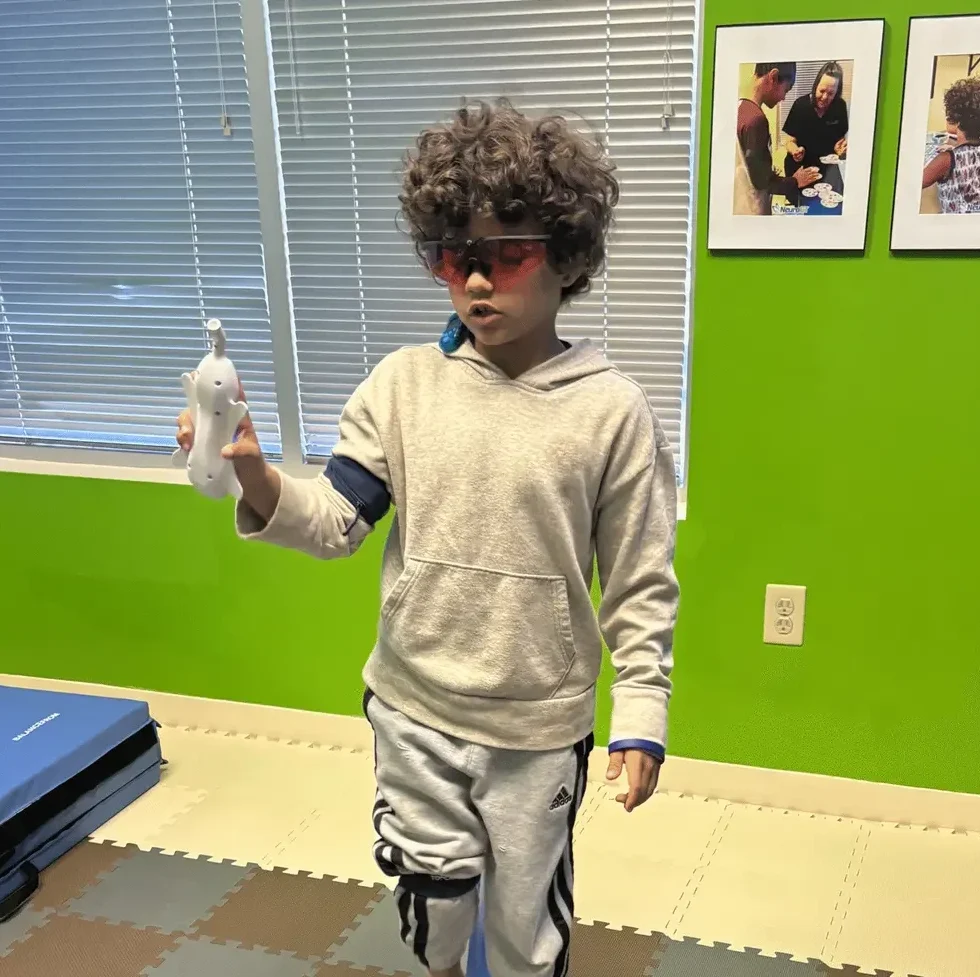
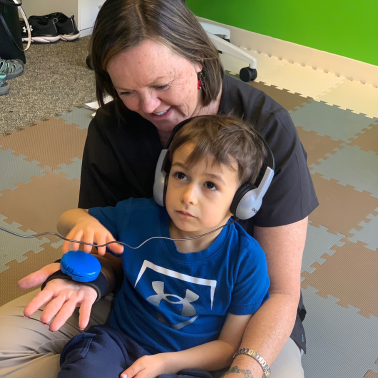
Depending on the assessment findings, a personalized program may incorporate activities that challenge areas such as balance, coordination, sensory processing, visual and auditory processing, attention, working memory, executive functioning, or other foundational skills.

The goal isn’t simply to practice “paying attention.”

It’s to provide purposeful experiences that challenge the underlying systems children rely upon for attention, learning, self-regulation, movement, and everyday participation.

As your child progresses, the program can progress with them—providing new challenges while continuing to build upon developing skills.

The Goal: Stronger Foundations for Everyday Life

Better brain function isn’t about changing your child’s personality or taking away the qualities that make them unique.

It’s about helping foundational systems work together more effectively so your child has greater opportunity to use their strengths.

That may mean being better able to stay engaged in a lesson, remember what comes next, manage frustration, complete a routine, participate with friends, or approach a challenge with greater confidence.

We don't build a program around ADHD.
We build it around your child.

Building a Stronger Foundation for Lifelong Success

Childhood is filled with increasingly complex demands.

Remembering what to bring to school. Following a morning routine. Completing an assignment. Managing disappointment. Keeping track of responsibilities. Navigating friendships. Learning to plan ahead.

As children grow, many of these responsibilities gradually shift from the adults around them to the child themselves.

The foundational brain skills involved in attention, working memory, organization, planning, self-regulation, and cognitive flexibility help make that growing independence possible.

Growing toward independence

Building Skills for Today—and Tomorrow

The goal of a personalized NeuroFiT program isn’t simply to help a child focus better during one lesson or complete one homework assignment.

It’s to strengthen foundational skills they can draw upon across many different situations.

As children develop those skills, they may become better equipped to:

  • 🎯 Stay engaged when something requires sustained effort

  • 📋 Plan and follow through on responsibilities

  • 🎒 Organize belongings, schoolwork, and daily routines

  • 💛 Navigate frustration and unexpected challenges

  • 🔄 Adapt when plans or expectations change

  • 🤝 Participate more successfully with family and friends

  • 🌟 Approach new challenges with greater confidence

  • 🧭 Take increasing responsibility for themselves

These aren’t just school skills.

They’re life skills.

Growing Independence Happens One Step at a Time

For one child, progress might mean remembering to bring an assignment home.

For another, it might mean completing a morning routine with fewer reminders.

Another child may begin recovering more easily when something doesn’t go according to plan.

And another may simply become more willing to attempt something that once felt too difficult.

Those everyday moments matter.

Each successful experience gives a child another opportunity to practice using developing skills, experience what they’re capable of, and take another step toward greater independence.

Looking Beyond ADHD

Your child’s diagnosis is one part of their story. It doesn’t define their intelligence, creativity, personality, strengths, or potential.

That’s why our focus isn’t on changing who your child is.

We want to help strengthen the foundational brain skills that may be making everyday life more difficult, while preserving and celebrating the qualities that make your child uniquely themselves.

Because ultimately, success isn’t simply about being able to pay attention.

It’s about having the skills and confidence to learn, participate, connect, adapt, and become increasingly independent in the world around them.

Stronger foundations today can create more opportunities for tomorrow.

Confidence Creates Possibilities

Investing in Your Child's Future

Every child deserves the opportunity to discover what they’re capable of.

For children with ADHD, the challenges they experience today can sometimes make it difficult for their strengths to shine through. Difficulty staying focused, managing emotions, keeping track of responsibilities, or following through doesn’t define a child’s intelligence, creativity, personality, or potential.

At NeuroFiT Connections, we look beyond the diagnosis to understand the individual child. Through a comprehensive Brain & Body Assessment, we identify strengths and challenges and use those findings to create a personalized program designed around the foundational brain skills your child needs most.

The goal isn’t perfection—and it isn’t to change who your child is.

It’s to help your child develop stronger foundations for learning, self-regulation, participation, confidence, and increasing independence.

The skills children build today can become tools they carry with them into tomorrow—as school becomes more demanding, responsibilities increase, relationships become more complex, and they begin navigating more of the world on their own.

Because investing in your child’s development today is about more than managing ADHD. It’s about helping them build the skills and confidence to pursue everything they’re capable of tomorrow.

We're not simply focused on helping children with today's challenges.
Our goal is to help strengthen the foundational skills that can support
learning, participation, confidence, and greater independence as they grow.

What You'll Learn During Your Child's Brain & Body Assessment

Every child with a learning disorder has a unique combination of strengths and challenges. That’s why every NeuroFiT Connections program begins with a comprehensive Brain & Body Assessment.

Rather than relying on a diagnosis alone, we evaluate multiple aspects of brain function to better understand why your child may be struggling. This allows us to create a personalized brain training program based on your child’s unique neurological profile—not simply their diagnosis.

During your child’s assessment, you’ll gain valuable insights into the brain functions that influence learning, attention, processing, memory, executive functioning, sensory integration, and more.

During your assessment, you’ll receive:

Program FAQs

Attention-Deficit/Hyperactivity Disorder (ADHD) is a neurodevelopmental condition that can affect attention, impulse control, activity level, executive functioning, organization, working memory, and emotional regulation.

ADHD can look very different from one child to another. Some children primarily struggle with maintaining attention or remembering instructions, while others may have greater difficulty with impulsivity, activity level, organization, time management, or self-regulation. Many experience a combination of challenges.

These differences can affect schoolwork, friendships, family routines, responsibilities, and confidence. At the same time, children with ADHD can be exceptionally bright, creative, curious, energetic, and capable. ADHD is only one part of who they are.

No. Your child does not need a formal ADHD diagnosis to begin with NeuroFiT Connections.

Some families come to us after their child has already been diagnosed, while others simply know that their child is struggling with attention, organization, impulsivity, emotional regulation, learning, or everyday routines and want to better understand why.

Every program begins with a comprehensive Brain & Body Assessment. Rather than using a diagnosis alone to determine what your child needs, we evaluate multiple areas of brain and body function to develop a clearer picture of your child's individual strengths and challenges.

If you are concerned that your child may have ADHD and are seeking a formal diagnosis, we encourage you to discuss those concerns with an appropriately qualified healthcare professional.

NeuroFiT Connections is not a medical treatment, psychotherapy, counseling, or occupational therapy. We provide a personalized, neuroscience-informed brain training and wellness program focused on strengthening foundational brain skills.

Traditional ADHD care may include medication, behavioral interventions, psychotherapy, parent training, educational accommodations, coaching, or a combination of approaches. These can be valuable tools for many children.

Our role is different. We begin by looking at how your child's individual brain and body systems are functioning and then develop a personalized program that may include physical, sensory, motor, visual, auditory, cognitive, rhythm and timing, and executive-function activities based on their assessment results.

Our program can complement other services your child receives and is not intended to replace appropriate medical, psychological, educational, or therapeutic care.

The Brain & Body Assessment is designed to help us understand your child's unique pattern of strengths and challenges.

Depending on your child's age and abilities, we may evaluate up to ten areas of brain and body function, including eye movements, primitive reflexes, rhythm and timing, cognition, proprioception, fine motor skills, auditory processing, core function, and coordination.

Together, these findings help us develop a more comprehensive picture of how your child's brain is processing information, coordinating movement, supporting learning, and interacting with the world around them.

Afterward, you'll receive a detailed report explaining what we found in clear, parent-friendly language. We'll review the findings with you, answer your questions, and discuss our recommendations.

No two children with ADHD have exactly the same strengths, challenges, or goals, so no two NeuroFiT programs should be exactly the same.

We use the results of your child's Brain & Body Assessment to determine which foundational skills may benefit from additional support. From there, we create a personalized program using activities selected specifically for your child's individual profile.

As your child progresses, activities can be adjusted and advanced to provide appropriate challenges and continue building upon developing skills.

Rather than building a program around an ADHD diagnosis, we build the program around your child.

Your child's program will depend entirely on their assessment results, but areas we may work to strengthen include:

  • Attention and focus
  • Working memory
  • Executive functioning
  • Planning and organization
  • Impulse control
  • Emotional regulation
  • Cognitive flexibility
  • Rhythm and timing
  • Visual and auditory processing
  • Balance and coordination
  • Sensory and body awareness
  • Fine and gross motor skills

These skills don't operate independently. Everyday activities such as completing homework, following a morning routine, participating in a conversation, or managing frustration require many brain systems to work together.

Our goal is to strengthen the foundational skills identified through your child's assessment so they are better equipped to meet the demands of learning and everyday life.

Children's brains continue developing throughout childhood and adolescence and can change in response to learning, experience, and practice—a capacity known as neuroplasticity.

That means children can develop and strengthen many of the skills involved in attention, working memory, organization, planning, self-regulation, and executive functioning.

Progress is different for every child. For one child, it may mean completing a routine with fewer reminders. For another, it may mean staying engaged longer, managing frustration more effectively, remembering what comes next, or becoming more willing to tackle something challenging.

We don't promise a particular outcome or timeline. Instead, we identify your child's individual needs, provide purposeful opportunities to develop those skills, and adjust their personalized program as they progress.

No. The goal isn't to change who your child is.

Children with ADHD may be creative, curious, energetic, spontaneous, persistent, imaginative, enthusiastic, or capable of becoming deeply engaged in subjects that interest them. Those individual qualities and strengths are part of your child—not something we want to take away.

Our goal is to help strengthen foundational brain skills that may be making attention, organization, self-regulation, learning, relationships, or everyday participation more difficult.

We want your child's strengths to have more opportunities to shine through while helping the challenges become less limiting.

Retain the strengths. Make the challenges less limiting.

Continue Learning About ADHD

ADHD and Executive Function: Why Everyday Tasks Can Feel So Difficult
25Aug

ADHD and Executive Function: Why Everyday Tasks Can Feel So Difficult

“Go get ready for school.” It sounds like one task. But a few minutes later, your child is sitting on the bedroom floor playing with something they found under the bed. They’re still wearing pajamas. Their teeth aren’t brushed. Their…

ADHD and Emotional Regulation: Why Are the Reactions So Big?
24Aug

ADHD and Emotional Regulation: Why Are the Reactions So Big?

You tell your child it’s time to stop playing. They explode. Their sibling gets the “wrong” cup. They’re devastated. Homework doesn’t go the way they expected. The pencil gets thrown across the room. A friend says something mildly disappointing. Your…

Why Are Transitions So Difficult for Children with ADHD?
23Aug

Why Are Transitions So Difficult for Children with ADHD?

“Five more minutes, and then it’s time to turn off the tablet.” Your child agrees. Five minutes later, you give the reminder. “Okay, time’s up. Let’s get ready for dinner.” And suddenly, everything falls apart. They’re angry. They’re arguing. They’re…