

Why Does My Child Need Everything Repeated?
“I just told you that.”
“Why do I have to repeat everything?”
“I know you heard me!”
If you’ve found yourself saying these phrases over and over, you’re not alone. Many parents become frustrated when their child seems to ignore directions, forgets instructions almost immediately, or needs the same information repeated multiple times.
The surprising part? Your child may not be ignoring you at all.
In many cases, the challenge isn’t hearing the words—it’s how efficiently the brain processes and responds to them.
Hearing Isn’t the Same as Processing
One of the biggest misconceptions parents have is assuming that if their child’s hearing test is normal, there can’t be a problem with listening.
In reality, hearing and processing are two very different things.
Your child’s ears may detect sounds perfectly, but the brain still has to:
- Recognize the sounds.
- Interpret their meaning.
- Organize the information.
- Store it in working memory.
- Decide how to respond.
If any part of that process is less efficient, your child may appear not to be listening—even when they’re trying their best.
Common Signs Your Child May Be Struggling with Processing
Children who need directions repeated often experience other challenges as well, including:
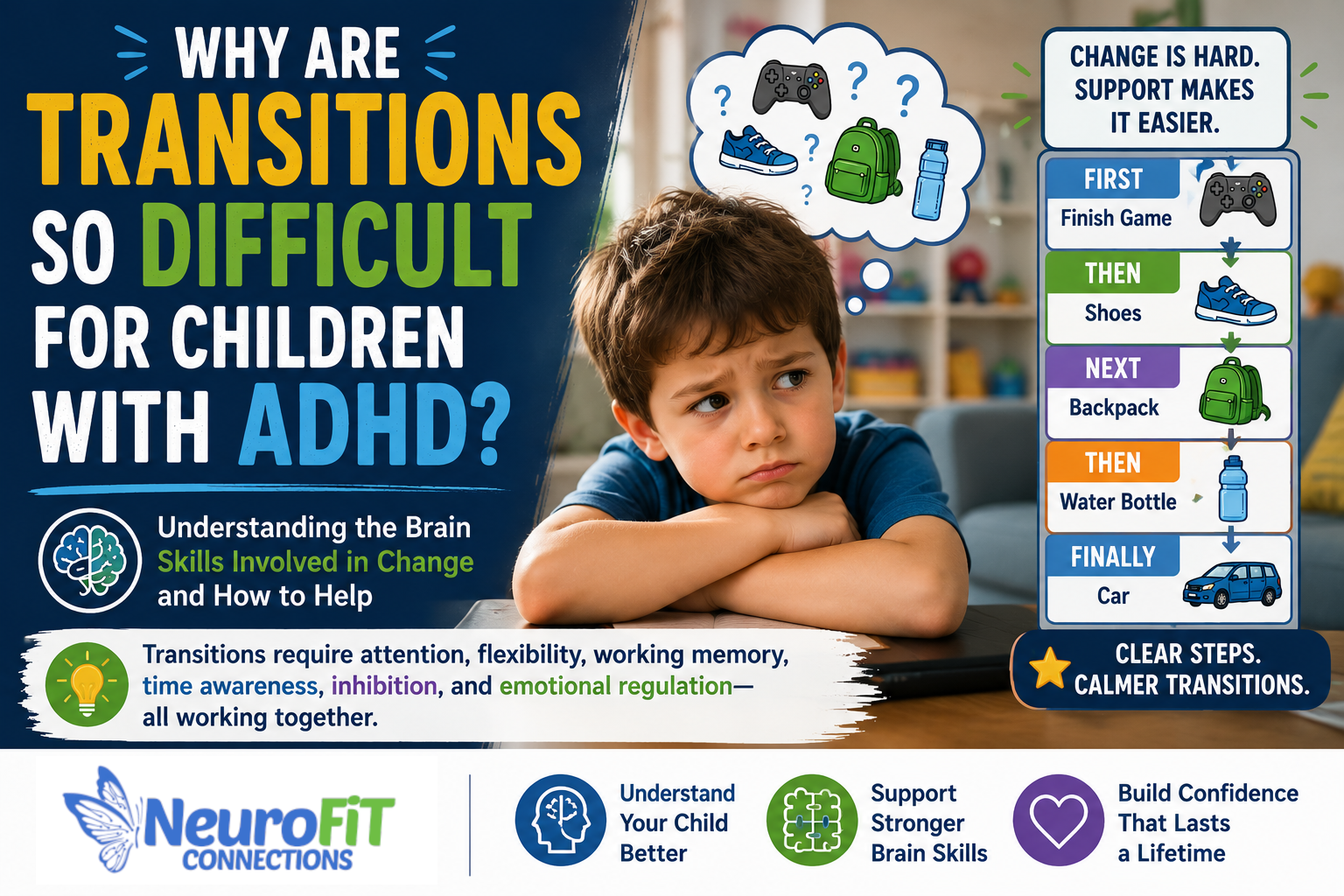
- Difficulty following multi-step directions.
- Taking longer than expected to answer questions.
- Frequently saying “What?” even though hearing is normal.
- Forgetting instructions shortly after hearing them.
- Struggling to keep up with classroom discussions.
- Becoming overwhelmed in noisy environments.
- Taking much longer to complete homework.
- Understanding concepts one-on-one but struggling in a busy classroom.
- Appearing distracted when they’re actually working hard to keep up.
If several of these sound familiar, it may be worth exploring whether an underlying processing challenge is contributing to your child’s difficulties.
Several Brain Functions May Be Involved
Needing everything repeated doesn’t necessarily point to one specific diagnosis. Multiple brain systems work together whenever we receive and respond to information.
Some of the most common contributors include:
Auditory Processing
Auditory processing refers to how the brain interprets spoken language. Children with auditory processing challenges often hear normally but have difficulty understanding spoken information, especially in noisy environments or when directions become more complex.
Working Memory
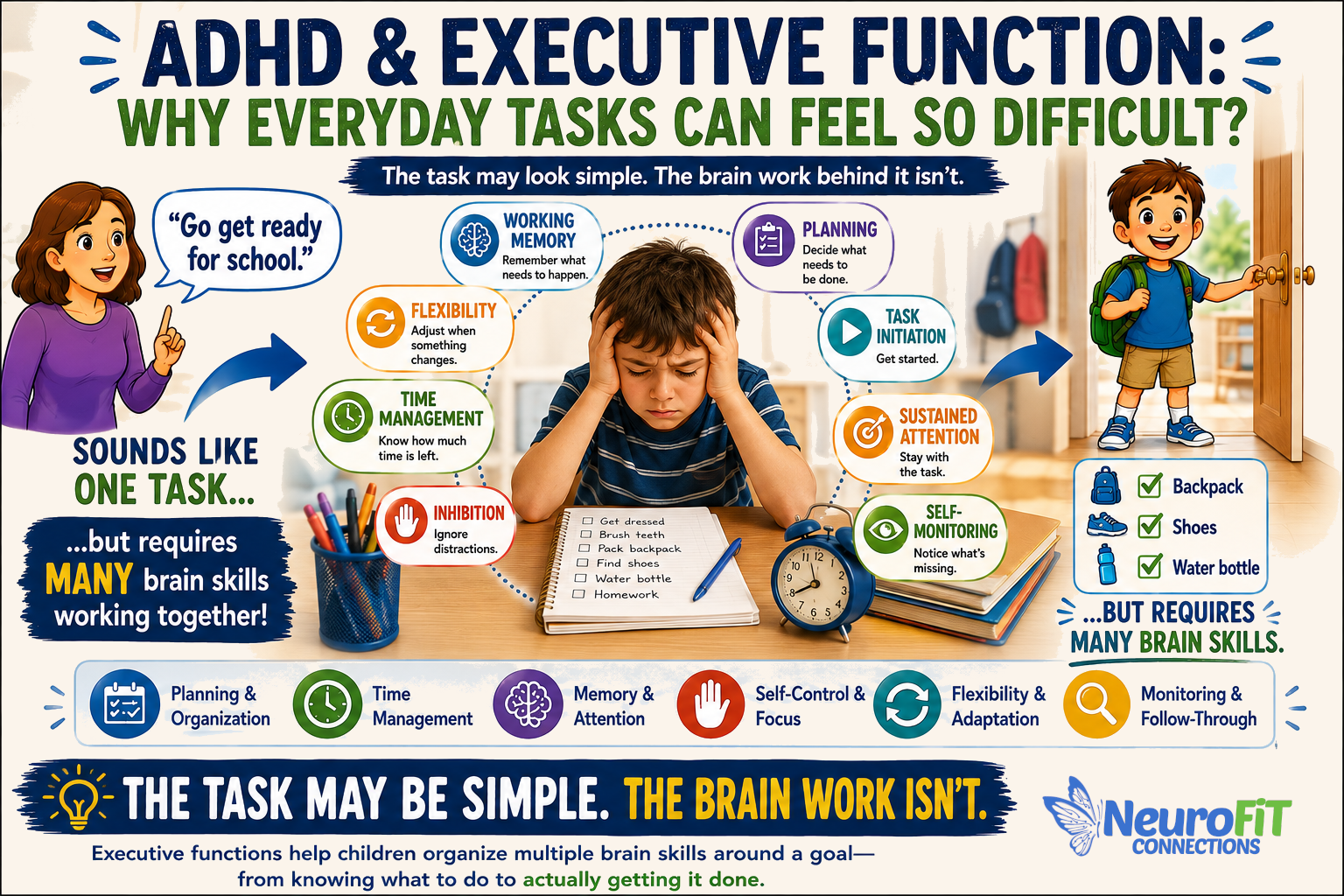
Working memory allows us to temporarily hold and use information. If working memory is less efficient, a child may understand a direction when they first hear it but lose track of it before completing the task.
Processing Speed
Some children simply need more time for their brains to organize and respond to information. They often know the answer but take longer to process what’s being said before responding.
Executive Function
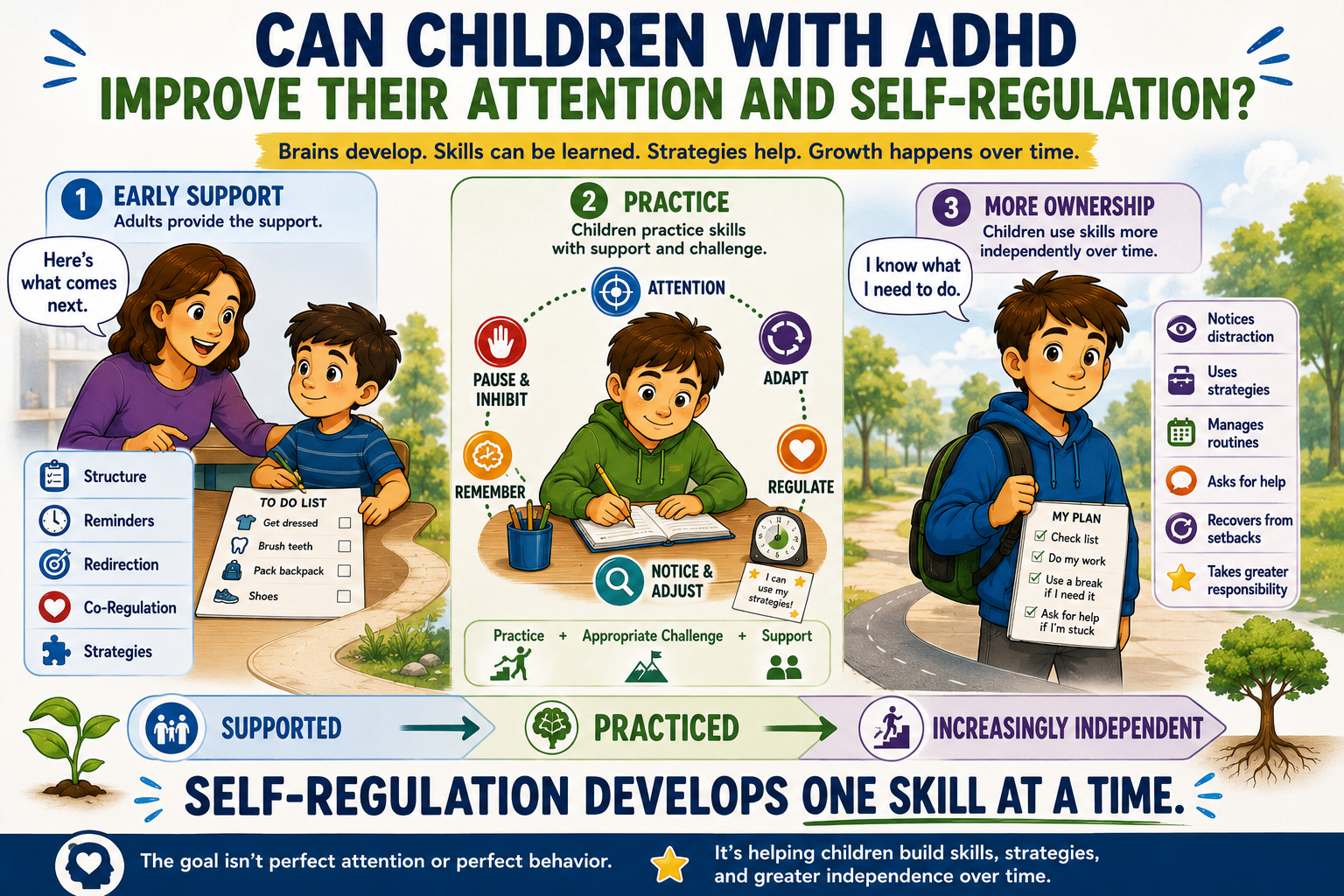
Executive functioning helps children plan, organize, prioritize, and carry out tasks. Difficulties in this area can make it harder to remember and follow instructions, especially when several steps are involved.
Attention
Attention plays an important role as well. If a child’s brain struggles to maintain focus, important information may never be fully processed in the first place.
Because these systems work together, children often experience challenges in more than one area.
It’s Usually Not a Motivation Problem
Parents sometimes worry that their child is being lazy, careless, or intentionally ignoring them.
More often, children become frustrated because they’re trying very hard but can’t process information as efficiently as their peers.
Imagine trying to follow directions in a language you only partially understand. You might ask people to repeat themselves, lose track of the conversation, or feel overwhelmed—not because you aren’t paying attention, but because your brain is working much harder to keep up.
Many children with processing challenges experience something similar every day.
How NeuroFiT Connections Can Help
At NeuroFiT Connections, we begin by identifying why your child needs directions repeated rather than simply focusing on the behavior itself.
Our comprehensive Brain & Body Assessment evaluates multiple aspects of brain function, including:
- Attention
- Executive functioning
- Working memory
- Processing speed
- Auditory processing
- Visual processing
- Sensory processing
- Motor coordination
- Primitive reflexes
- Other neurological systems that influence learning and communication
Using these results, we develop a personalized brain training program designed to strengthen the specific brain functions that may be contributing to your child’s challenges.
Rather than using a one-size-fits-all approach, every program is tailored to your child’s unique neurological profile and developmental needs.
Small Improvements Can Make a Big Difference
When the brain processes information more efficiently, everyday life often becomes less frustrating.
Many families report improvements in areas such as:
- Following directions more consistently.
- Completing homework with greater independence.
- Responding more quickly during conversations.
- Improved classroom participation.
- Better organization and task completion.
- Increased confidence.
- Less frustration for both children and parents.
Every child’s progress is unique, but strengthening the brain functions that support listening, learning, and communication can have a positive impact across many aspects of daily life.
When Should You Seek an Evaluation?
If your child regularly:
- Needs everything repeated,
- Has difficulty following directions,
- Takes much longer than peers to process information,
- Struggles despite normal hearing,
- Or seems bright but consistently falls behind,
it may be time to look beyond the symptoms and explore the underlying brain functions that support learning and communication.
A comprehensive evaluation can help identify the factors contributing to your child’s challenges and provide a roadmap for personalized support.
Take the Next Step
If you’re constantly repeating yourself and wondering why your child doesn’t seem to understand, you’re not alone—and it doesn’t necessarily mean they aren’t trying.
At NeuroFiT Connections, our comprehensive Brain & Body Assessment helps identify the neurological factors that may be contributing to processing, attention, and learning challenges. From there, we create a personalized brain training program designed to strengthen the brain functions that support listening, communication, learning, and everyday success.
If you’d like to learn more or schedule an assessment, we’d be happy to help.