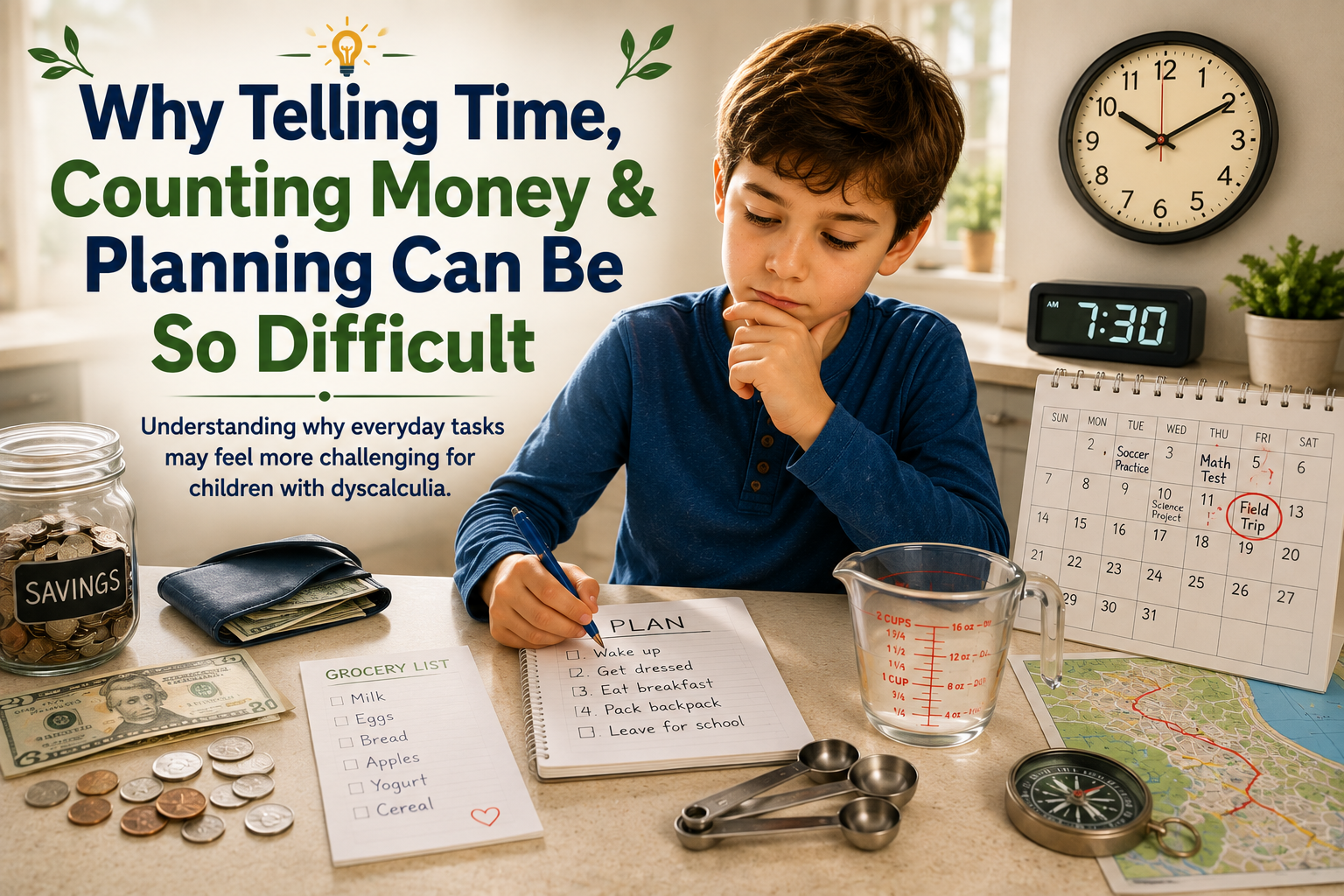

For many children with dyscalculia, the hardest part of math isn’t the numbers.
It’s how those experiences begin to shape the way they see themselves.
After enough frustrating homework assignments, confusing word problems, or difficult everyday situations involving time and money, many children begin reaching a painful conclusion:
“I’m just not good at this.”
Over time, that belief can influence far more than mathematics.
It can affect confidence, participation, independence, and the willingness to try something new.
The encouraging news is that confidence is not built by being perfect.
Confidence grows through understanding, encouragement, and meaningful success over time.
Confidence Doesn’t Begin with Perfect Scores
Many parents naturally hope to see higher math grades.
While academic improvement is important, confidence usually develops long before perfect test scores appear.
It often begins with small victories:
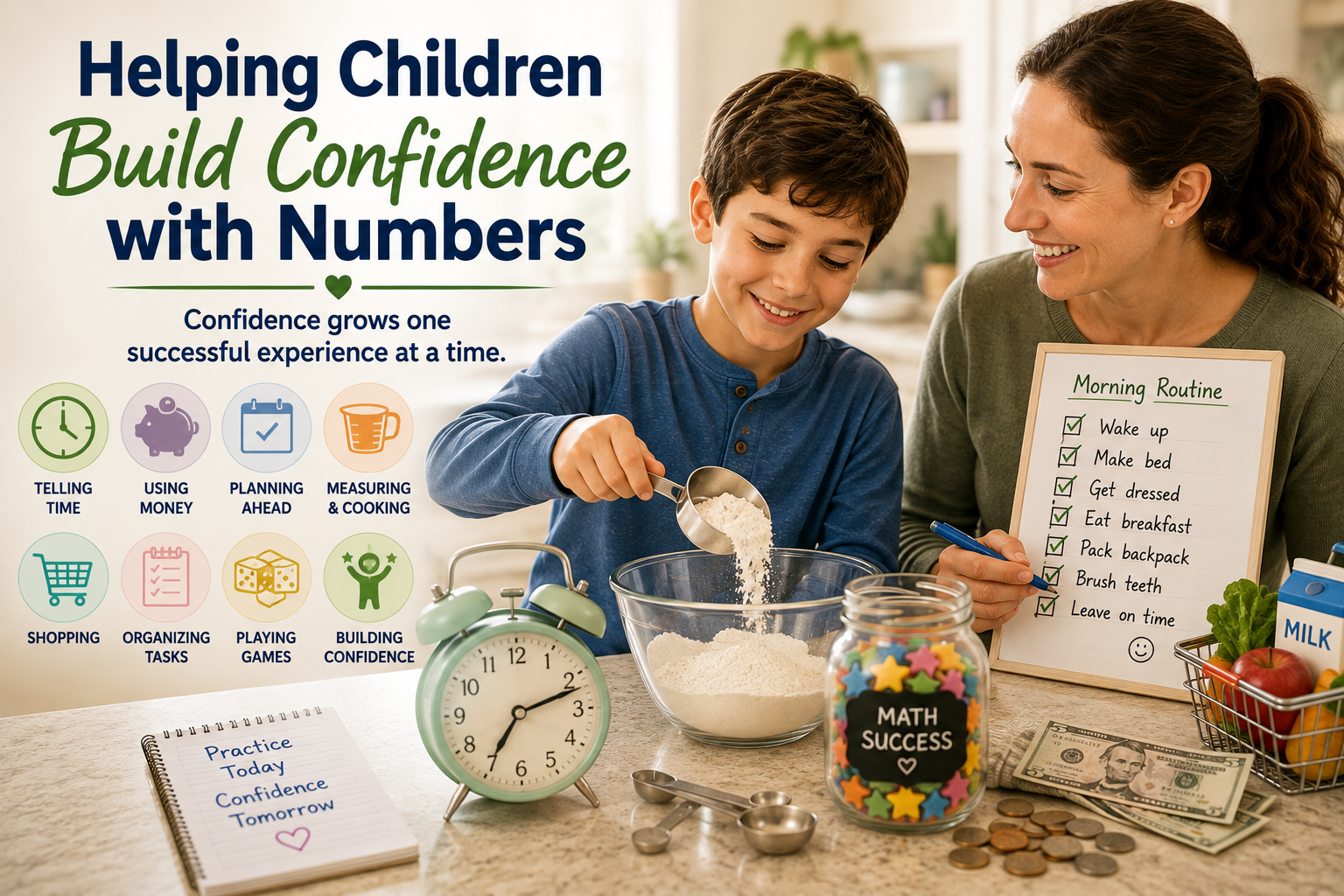
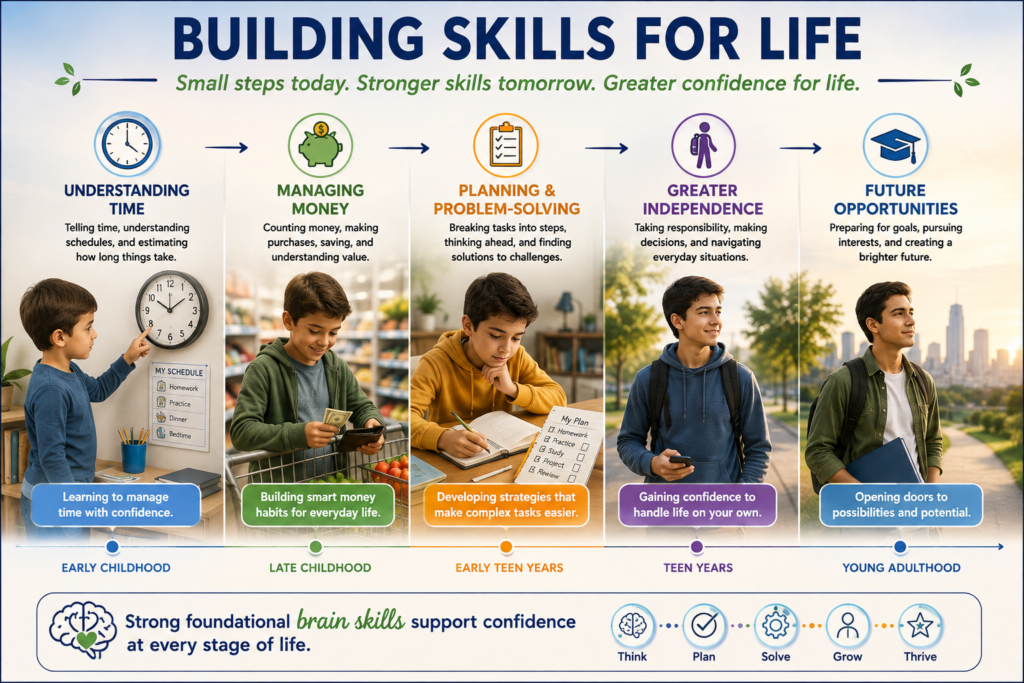
- Reading a clock independently.
- Correctly estimating how long a task will take.
- Counting money with less assistance.
- Following a recipe successfully.
- Completing a shopping trip.
- Solving a problem that once felt overwhelming.
Each success tells a child:
“I can do this.”
Those moments become the building blocks of confidence.
Children Often Begin Avoiding What Feels Difficult
When something consistently feels confusing, avoidance becomes understandable.
Children may begin:
- Saying “I hate math.”
- Rushing through homework.
- Avoiding classroom participation.
- Giving up quickly.
- Letting others answer for them.
- Believing they’re “bad at school.”
Often, these behaviors are not signs of laziness.
They are signs of discouragement.
Avoidance protects children from experiencing failure again.
Confidence Grows Through Participation
One of the biggest changes families often describe isn’t simply better performance.
It’s greater participation.
Children may become more willing to:
- Ask questions.
- Try unfamiliar problems.
- Volunteer answers.
- Participate in games involving numbers.
- Help with cooking.
- Manage small purchases.
- Organize their schedules.

Those experiences reinforce something much more valuable than a correct answer.
They reinforce the belief that learning is possible.

Everyday Success Matters
Children don’t build confidence only in classrooms.
They build it while living everyday life.
Helping make dinner.
Measuring ingredients.
Shopping.
Reading a bus schedule.
Planning a family outing.
Estimating travel time.
Managing an allowance.
Each experience becomes another opportunity to practice mathematical thinking in a meaningful, real-world context.
Looking Beyond Math
Confidence isn’t really about numbers.
It’s about participation.
When children feel more comfortable understanding time, money, planning, measurement, and problem-solving, they often become more willing to engage with the world around them.
The goal isn’t simply becoming “good at math.”
It’s helping children feel capable of navigating everyday life.
How NeuroFiT Connections Can Help
At NeuroFiT Connections, we believe confidence grows from understanding.
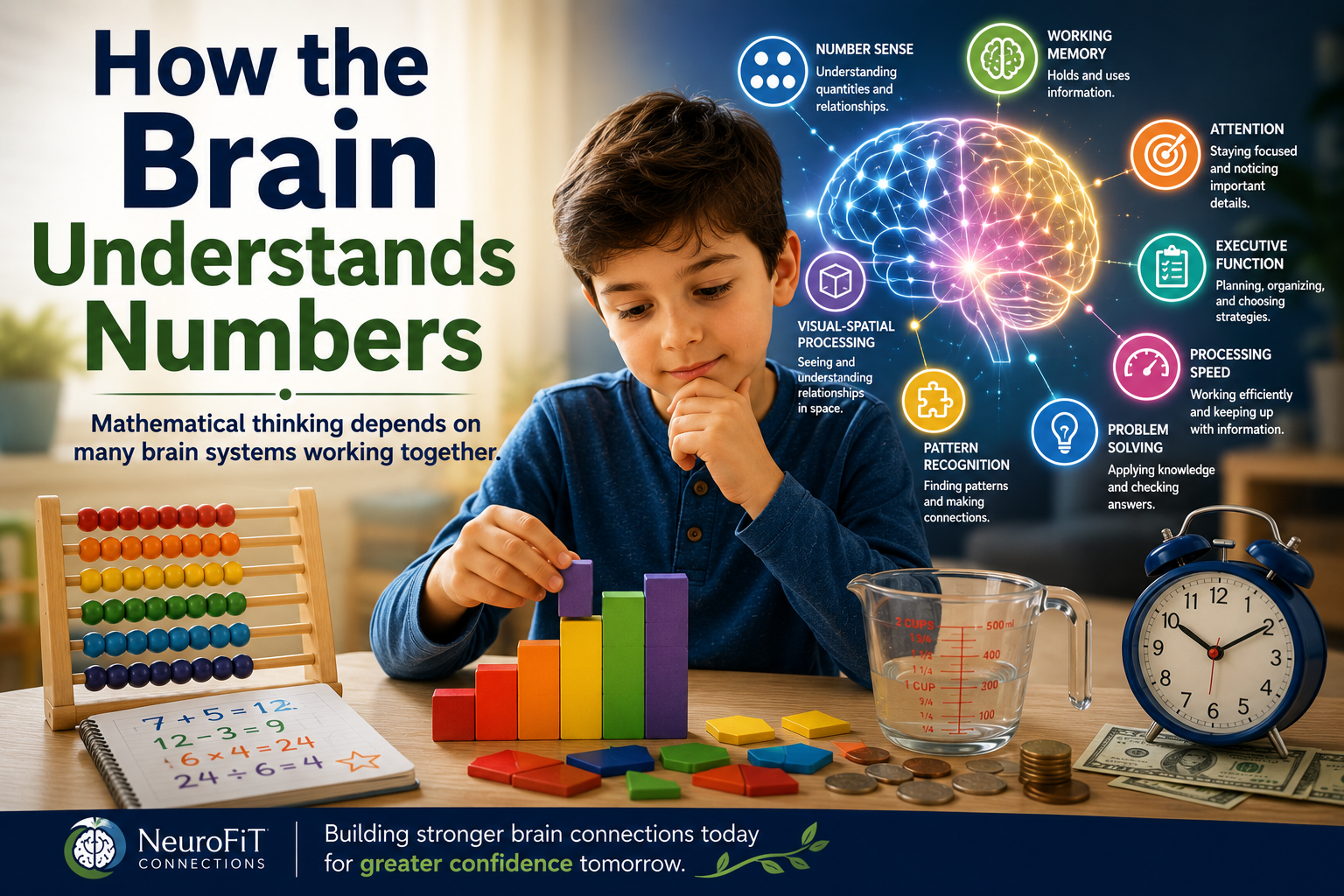
Our Brain & Body Assessment helps us identify the foundational brain skills that support mathematical thinking and everyday learning.
Using those results, we create a personalized brain training program tailored to your child’s unique strengths and challenges.
Our goal isn’t simply improving classroom performance.
It’s helping children build the confidence to understand, navigate, and succeed in the world around them.
Final Thoughts
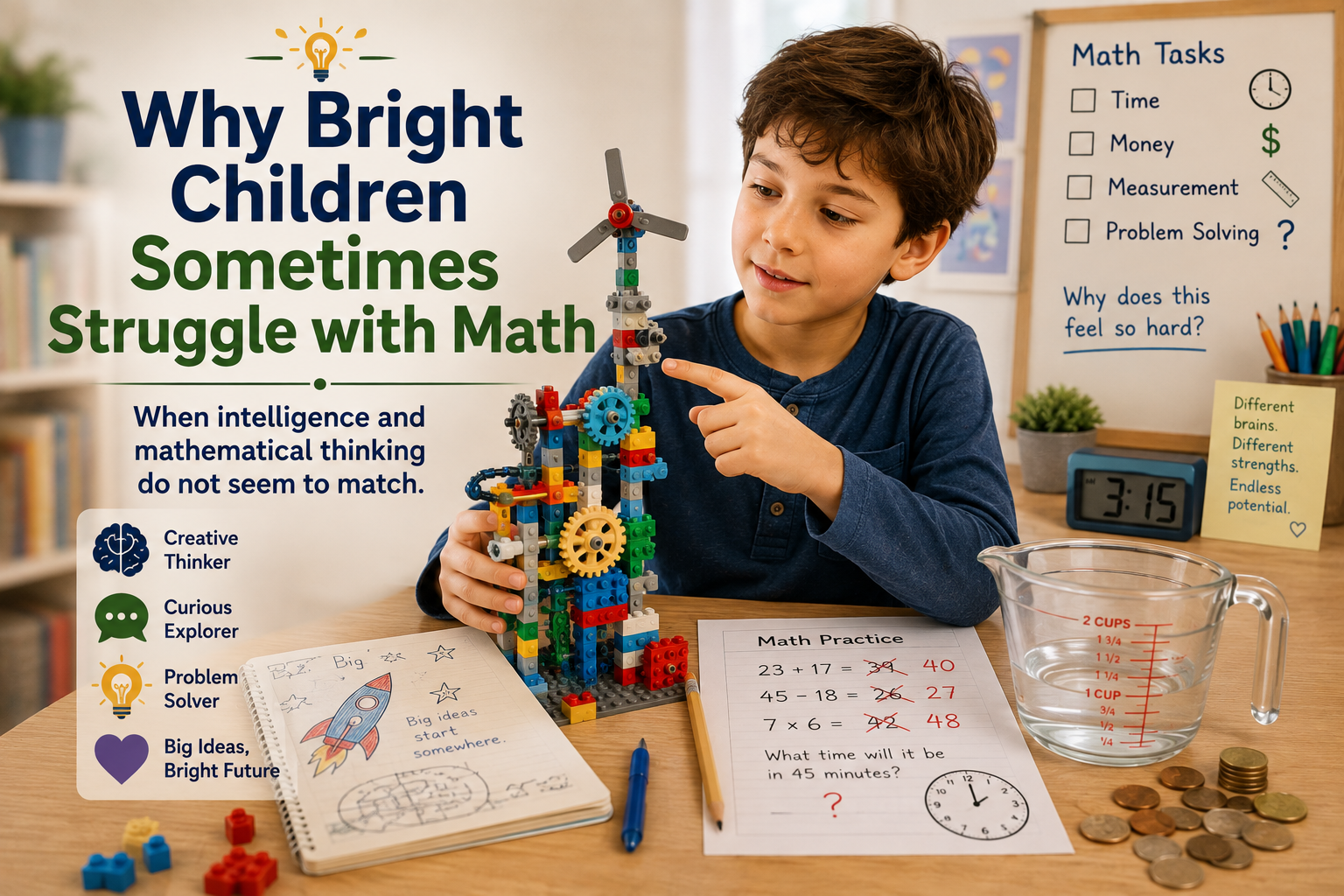
Children who struggle with numbers are often measuring themselves against classmates instead of recognizing their own unique strengths.
Confidence begins to change when children experience success that feels genuine and meaningful.
Sometimes that success is solving a problem.
Sometimes it’s managing money independently.
Sometimes it’s arriving on time because they planned their morning.
Those moments matter.
They remind children that learning is a journey—not a label.
Because every child deserves the confidence to understand, navigate, and succeed in the world around them.
FAQ
Does dyscalculia affect confidence?
It can. Repeated struggles with numbers may influence how children see their abilities, especially if they begin comparing themselves to classmates.
How can parents build math confidence?
Celebrate progress, encourage effort, provide opportunities to use numbers naturally in everyday life, and remember that confidence grows through understanding—not perfection
Why do children avoid math?
Avoidance often develops after repeated frustration. It may reflect discouragement rather than a lack of motivation.
Is confidence as important as academic performance?
Both matter. Confidence often influences whether children are willing to engage, practice, ask questions, and continue learning.