

Parents often ask an important question after their child is diagnosed with dyscalculia:
“Should my child use a calculator?”
Some worry that a calculator will become a crutch.
Others hope it will solve every math difficulty.
The reality lies somewhere in between.
Calculators can be valuable tools.
But they do not replace the underlying brain skills involved in understanding numbers, quantities, mathematical relationships, estimation, and problem solving.
Understanding that difference helps parents make more informed decisions.
Calculators Are Tools
We use calculators throughout adult life.
Accountants.
Scientists.
Engineers.
Doctors.
Architects.
Business owners.
Parents.
Using a calculator does not mean someone is “bad at math.”
It simply allows mental effort to be directed toward higher-level thinking rather than routine calculation.
When Calculators Can Be Helpful
For children with dyscalculia, calculators may reduce frustration during tasks that require extensive arithmetic.
They can help children:
- Complete longer assignments.
- Check calculations.
- Focus on solving problems rather than basic computation.
- Participate more fully in classroom activities.
- Demonstrate understanding without becoming overwhelmed by arithmetic demands.
For many students, calculators are an appropriate classroom accommodation.
What Calculators Cannot Do
A calculator can produce an answer.
It cannot tell a child:
- Whether the answer is reasonable.
- Which operation to choose.
- What the numbers represent.
- How quantities compare.
- Whether they entered the problem correctly.
- Why the answer makes sense.
For example:
If a child enters:
24 × 15
The calculator displays:
360
But it cannot explain:
- Why multiplication was appropriate.
- Whether 360 seems reasonable.
- How that answer relates to a real-world situation.
Understanding still matters.
Mathematical Thinking Is Much Bigger Than Arithmetic
One of the biggest misconceptions is that mathematics is simply calculation.
In reality, children rely on mathematical thinking when they:
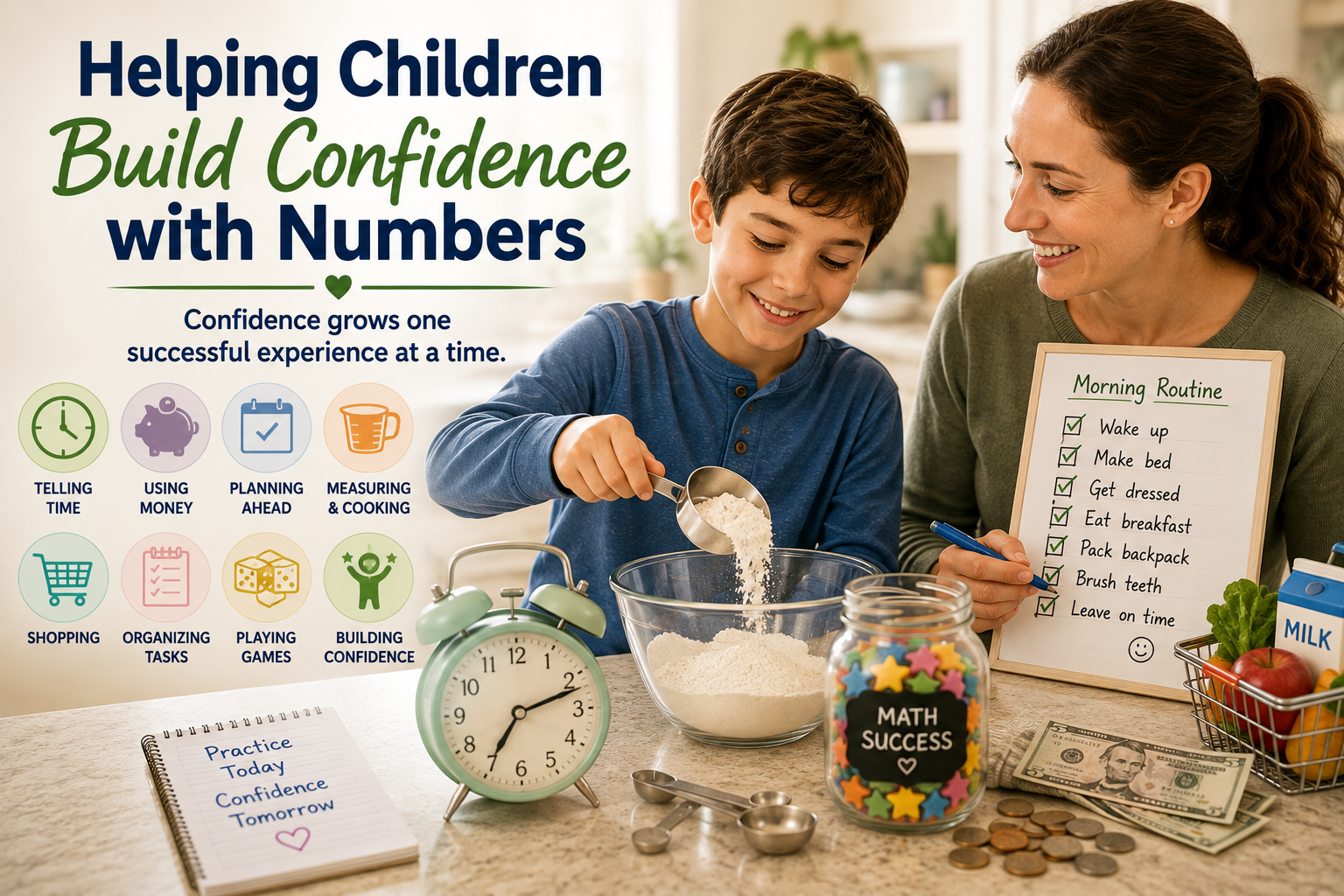
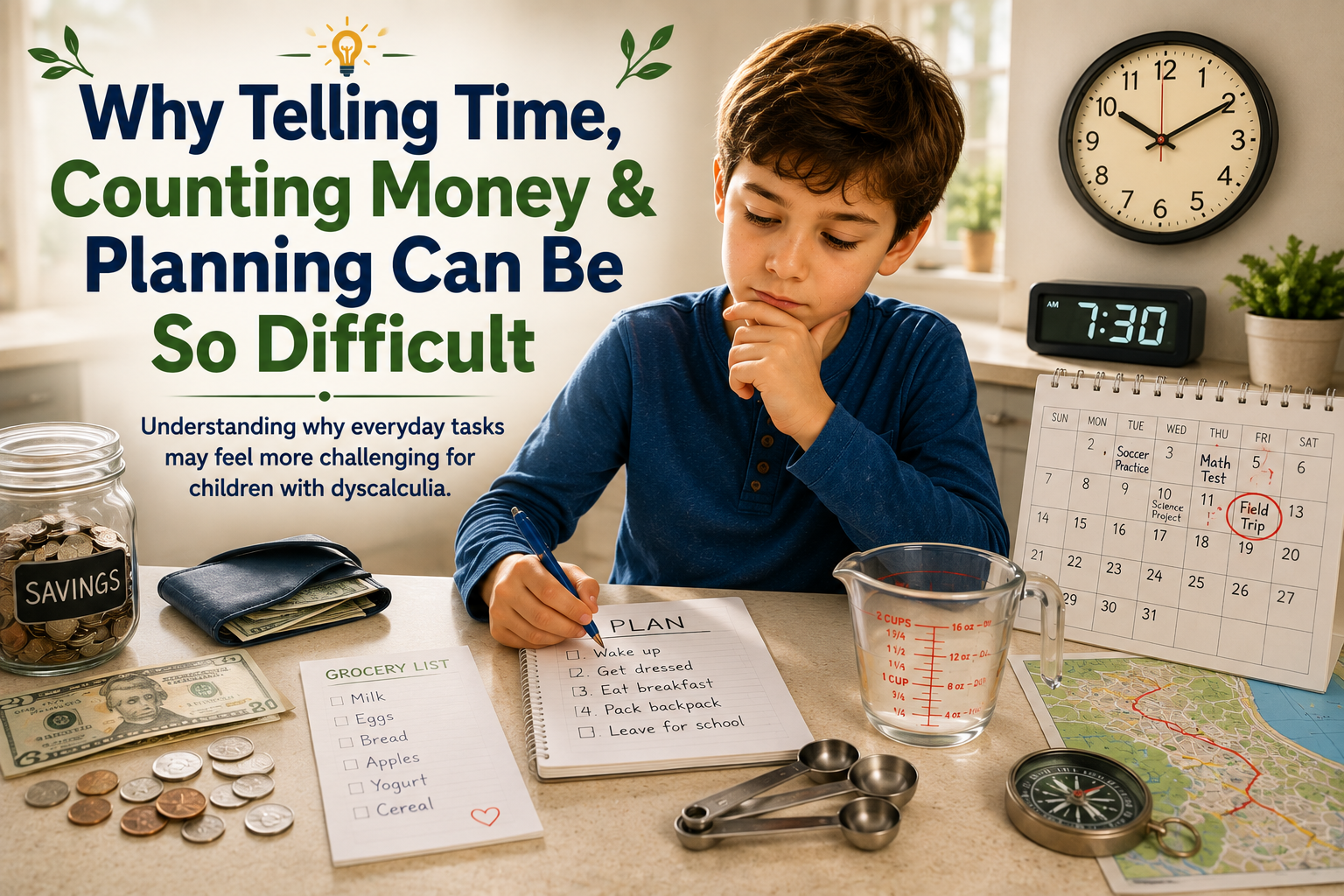
🕒 Estimate time
💰 Count money
🛒 Compare prices
🍳 Follow recipes
📅 Plan schedules
🧭 Navigate directions
🎲 Play games
A calculator cannot perform those everyday thinking skills for them.

Building Understanding First
Imagine giving a child a calculator before they understand what numbers represent.
They might correctly type:
18 + 7
They might receive:
25
But without number sense, that answer remains a symbol rather than meaningful information.
Children benefit most when calculators support understanding—not replace it.

Accommodations and Learning Can Work Together
Using a calculator does not mean giving up on learning.
Many schools appropriately provide calculators as accommodations so students can demonstrate what they know while reducing barriers created by arithmetic.
At the same time, educators and families can continue helping children strengthen the underlying concepts that support mathematical thinking.
These goals are not opposites.
They complement one another.
Looking Beyond the Calculator
At NeuroFiT Connections, we believe it is important to look beyond tools and ask a different question:
“Why does this child need the calculator?”
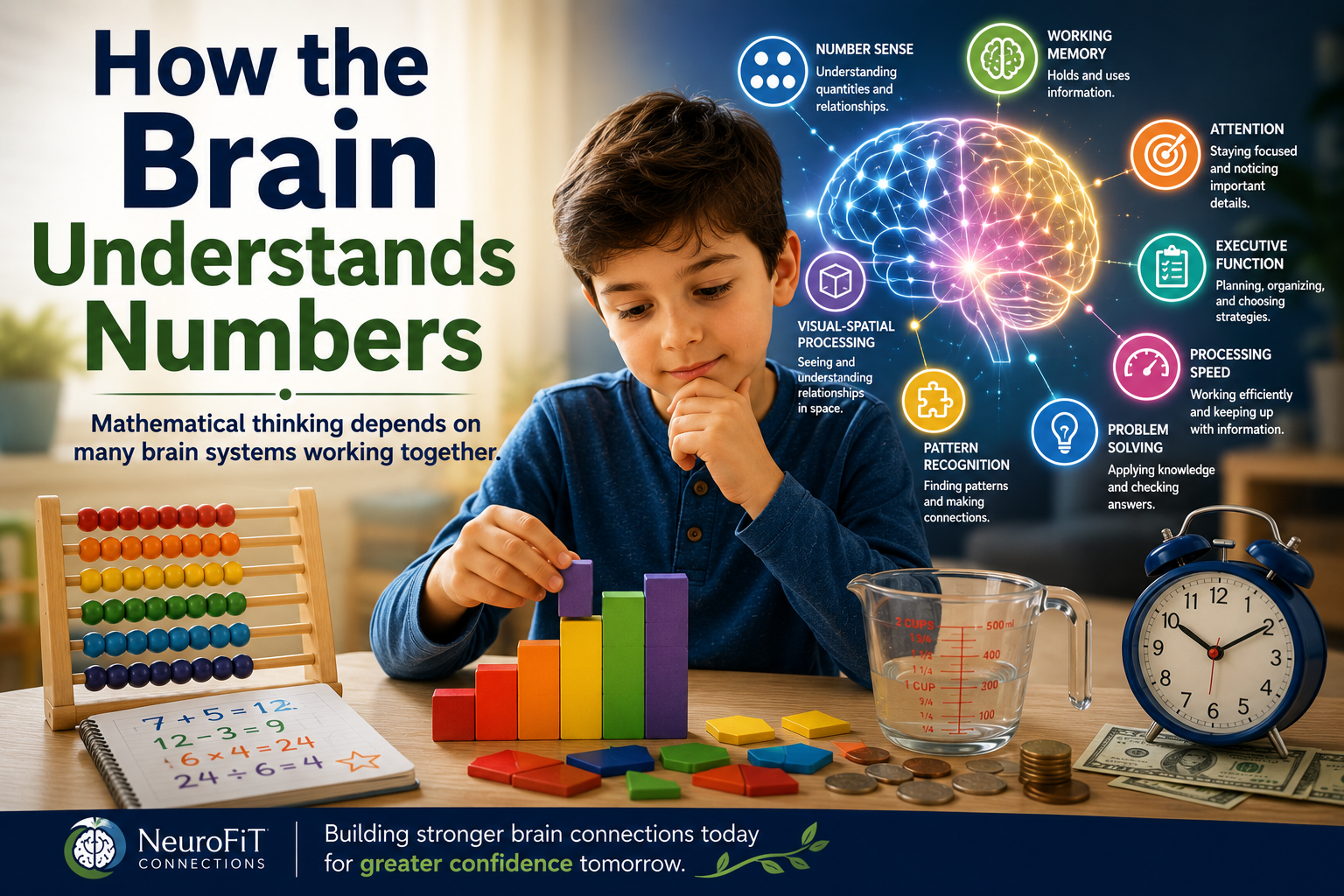
The answer may involve:
- Number sense
- Working memory
- Visual-spatial processing
- Executive functioning
- Attention
- Processing speed
- Pattern recognition
Understanding those underlying brain skills can provide valuable insight into how a child learns.
That is why every NeuroFiT program begins with a comprehensive Brain & Body Assessment before developing a personalized brain training plan.
Final Thoughts
Calculators are neither good nor bad.
They are tools.
Like eyeglasses improve vision without replacing healthy eyes, calculators can reduce barriers while children continue learning.
The ultimate goal is not simply arriving at the correct answer.
It is helping children understand numerical relationships, solve problems, make decisions, and confidently navigate everyday life.
Because confidence grows through understanding—not merely through obtaining the answer.
Frequently Asked Questions
Should children with dyscalculia use calculators?
Many children benefit from calculators as an accommodation, particularly during complex arithmetic. Whether a calculator is appropriate depends on the child’s needs, learning goals, and educational setting.
Will calculators prevent my child from learning math?
Not necessarily. When used thoughtfully, calculators can reduce frustration while allowing children to focus on concepts and problem-solving. They are most effective when they supplement learning rather than replace it.
Can calculators improve confidence?
They can. By reducing the burden of lengthy calculations, calculators may help some children participate more fully and demonstrate what they know. Confidence, however, grows most sustainably when children also develop a deeper understanding of mathematical concepts.
Does my child still need to understand numbers?
Absolutely. Number sense, estimation, reasoning, and understanding quantities remain essential for everyday life, even when calculators are available.
How does NeuroFiT Connections approach dyscalculia?
We begin with a comprehensive Brain & Body Assessment to better understand the foundational brain skills that support mathematical thinking. From there, we create a personalized brain training program based on each child’s unique strengths and challenges.